- Home
-
-
Energy Storage Systems: Battery Solutions for Solar Power
Views: 0 Author: Site Editor Publish Time: 2026-06-02 Origin: Site
![facebook sharing button]()
![twitter sharing button]()
![line sharing button]()
![wechat sharing button]()
![linkedin sharing button]()
![pinterest sharing button]()
![whatsapp sharing button]()
![kakao sharing button]()
![snapchat sharing button]()
![sharethis sharing button]()
The integration of energy storage with solar power systems represents one of the most consequential developments in the clean energy transition. As solar installations grow to supply an increasing share of electricity demand globally, the intermittent nature of sunlight creates fundamental mismatches between when energy is generated and when it is consumed. Peak solar production occurs during midday hours when grid demand may be moderate, while peak electricity demand typically occurs in evening hours when solar generation has declined or ceased entirely. Batteries resolve this timing mismatch by storing excess solar production during periods of surplus for use when the sun is not shining, transforming solar installations from passive daytime generators into comprehensive energy management platforms capable of delivering power around the clock.
For homeowners seeking energy independence, business operators managing energy costs, and energy project developers optimizing portfolio economics, understanding energy storage technologies, sizing approaches, and operational strategies unlocks the full potential of solar-plus-storage investments. Battery systems add meaningful cost to solar installations—typically $10,000 to $30,000 for residential systems and millions of dollars for commercial and utility-scale installations—but deliver compelling value through reduced electricity bills, resilient backup power capability, and new revenue opportunities through grid services participation.
What Are Energy Storage Systems for Solar Power
Energy storage systems for solar power are technologies that capture electrical energy from photovoltaic installations and retain it electrochemically for later use. The dominant storage technology for solar applications is rechargeable lithium-ion battery systems that store energy through the reversible movement of lithium ions between cathode and anode materials, releasing it on demand through power electronics converters that condition the battery's DC output for use by AC loads or grid export.
Modern solar-plus-storage systems operate in several coordinated modes simultaneously: storing excess solar generation that would otherwise be exported to the grid at low or zero feed-in tariff rates; discharging stored energy during peak electricity rate periods to reduce utility bills; providing seamless backup power during grid outages; and increasingly, participating in grid services markets where the flexibility provided by storage has significant economic value. The optimal operating mode depends on the specific electricity rate structure, the owner's consumption profile, and the availability of grid services revenue opportunities.
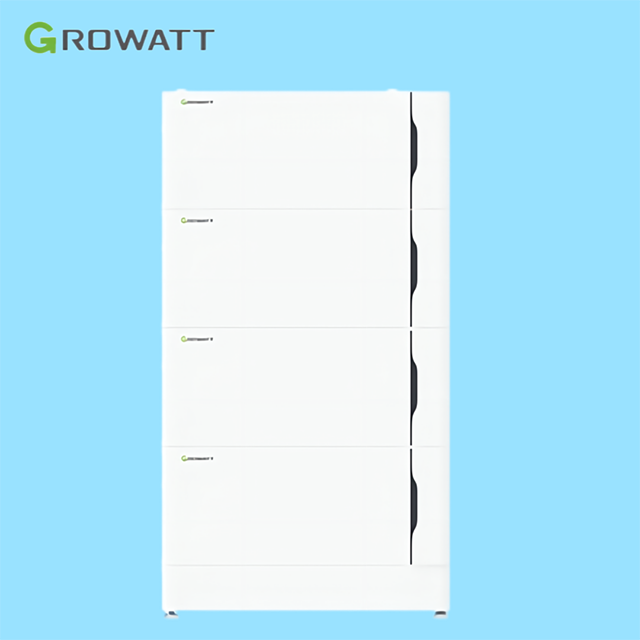
Companies including GROWATT have developed battery products that complement their inverter platforms, creating integrated energy management ecosystems that simplify installation, optimize system performance, and provide unified monitoring and control. GROWATT high-quality lithium iron phosphate batteries leverage LFP chemistry to deliver products with long cycle life exceeding 6,000 cycles at 80% depth of discharge and stable capacity retention, supported by comprehensive battery management systems that ensure safe, reliable operation across diverse operating conditions and geographic environments.
Types of Battery Technologies for Solar Storage
Lithium Iron Phosphate Batteries
Lithium iron phosphate (LFP or LiFePO4) batteries have emerged as the dominant chemistry for solar energy storage applications, driven by their excellent cycle life, superior thermal stability, and attractive safety characteristics. LFP cells achieve cycle lives exceeding 6,000 cycles at 80% depth of discharge—significantly better than nickel-rich chemistries—translating to 15 to 20 years of daily cycling for most residential and commercial applications.
The thermal stability of LFP chemistry is substantially better than NMC or NCA chemistries. LFP batteries can withstand temperatures up to 60°C without thermal runaway, while NMC batteries may enter thermal runaway at temperatures above 40°C under certain conditions. This characteristic makes LFP particularly well-suited for installations in hot climates including the Middle East, South Asia, and the American Southwest, where battery storage located in unconditioned spaces or outdoor enclosures must tolerate high ambient temperatures.
The absence of cobalt in LFP chemistry eliminates supply chain concerns associated with cobalt's geographic concentration (over 60% of global cobalt production originates from the Democratic Republic of Congo) and volatile pricing. LFP batteries deliver reliable long-term performance for residential, commercial, and utility-scale storage applications, making them the preferred choice for quality-focused manufacturers and installers.
Nickel Manganese Cobalt Batteries
Nickel manganese cobalt (NMC) lithium-ion batteries offer higher gravimetric and volumetric energy density than LFP, making them attractive for applications where physical space is constrained. NMC cells achieve 20% to 30% higher energy density, reducing the physical footprint and weight of storage systems—a meaningful advantage for residential installations with limited space and weight constraints on floors or walls.
However, NMC chemistry exhibits faster capacity fade over time, higher sensitivity to high temperatures, and greater fire risk compared to LFP. NMC batteries require more sophisticated thermal management systems, tighter state-of-charge management, and more conservative depth-of-discharge limits to maintain acceptable lifetime and safety. These requirements add complexity and cost to NMC-based storage systems.
Sodium-Ion Batteries
Sodium-ion batteries represent an emerging alternative to lithium-ion for stationary storage applications, utilizing abundant sodium ions rather than lithium as the charge carrier. Sodium-ion technology eliminates lithium dependency entirely, potentially reducing raw material costs and supply chain risks as global lithium demand exceeds supply growth.
Early commercial sodium-ion products have demonstrated cycle lives approaching 4,000 cycles and acceptable performance across wide temperature ranges. While not yet widely deployed in solar storage, sodium-ion technology is expected to capture meaningful market share as manufacturing scale improves and production costs decline. Several major battery manufacturers have announced gigawatt-scale sodium-ion production plans.
Flow Batteries
Vanadium redox flow batteries (VRFB) and zinc-bromide flow batteries store energy in liquid electrolytes circulating through electrochemical cells. Unlike lithium-ion batteries where energy storage occurs in solid electrode materials, flow batteries store energy in the electrolyte liquid itself, allowing power and energy capacity to be scaled independently—a fundamental architectural advantage for long-duration storage applications.
Flow batteries offer extremely long cycle life exceeding 20,000 cycles with minimal degradation, non-flammable electrolyte chemistry that eliminates fire risk, and the ability to fully discharge without damage. These characteristics make flow batteries attractive for grid-scale storage installations where discharge durations of 4 to 12 hours or more are required, and for applications where fire safety concerns limit lithium-ion deployment.
Core Benefits of Energy Storage for Solar Systems
Maximizing Self-Consumption and Reducing Electricity Bills
Without storage, grid-connected solar systems export excess generation to the utility grid during midday hours when production exceeds consumption. In many markets, feed-in tariff rates for exported solar electricity are substantially lower than retail electricity prices—often 30% to 70% less. This economic mismatch means that each kilowatt-hour of solar generation consumed directly saves the retail electricity price, while each kilowatt-hour exported saves only the much lower feed-in tariff rate.
Storage enables homeowners and businesses to capture solar generation for use during evening and nighttime hours when electricity consumption is highest and grid prices are most expensive. For commercial customers on time-of-use rate structures with peak period prices of $0.30 to $0.60 per kWh, strategic storage discharge during peak rate periods can dramatically reduce electricity costs. In California, Hawaii, and other markets with high peak-to-off-peak price ratios, solar-plus-storage can achieve simple paybacks under 5 years.
Backup Power and Grid Independence
Energy storage systems provide reliable backup power during grid outages, transforming solar installations into resilient energy systems that maintain electricity supply regardless of grid conditions. Battery-inverter systems with automatic transfer switching can restore power to critical loads within 20 milliseconds of grid failure—faster than most sensitive equipment notices the interruption.
For businesses operating in regions with unreliable grid infrastructure, storage backup protects against costly production interruptions. A single hour of production downtime in a manufacturing facility can cost thousands to hundreds of thousands of dollars, making backup storage a sound investment. For homeowners, storage backup maintains comfort, safety, and connectivity during grid emergencies.
Grid Services and Revenue Opportunities
Large-scale battery storage systems can participate in grid services markets, providing frequency regulation (rapid injection or absorption of power to stabilize grid frequency), spinning reserves (capacity held ready to respond within seconds), and demand response (reduction of load when requested by the grid operator). These services compensate storage operators for providing grid stability, improving the economic case for storage investments beyond simple self-consumption optimization.
Residential and commercial systems increasingly qualify for utility demand response programs that pay participants for load reduction during grid stress events. GROWATT hybrid inverters support automated demand response protocols that can automatically dispatch battery storage to reduce grid consumption when grid prices spike or during emergency demand response events.
Time-Shifting Solar Generation
Storage enables time-shifting of solar generation from periods of surplus to periods of deficit. In California, Hawaii, and other markets where midday solar oversupply creates grid management challenges, storage that absorbs excess midday generation and releases it during evening ramp periods reduces curtailment of solar plants and maximizes the utilization of existing solar assets. This capability is particularly valuable as grid operators manage increasingly renewable-dominated generation portfolios.
Energy Storage Technology: How Battery Systems Work
Battery Chemistry and Charge-Discharge Cycle
Battery storage systems operate through reversible electrochemical reactions. During charging, electrical energy from solar panels or the grid forces chemical changes in the battery's active materials—lithium ions move from the cathode (positive electrode) to the anode (negative electrode) in lithium-ion batteries, where they intercalate into the anode material's crystal structure. During discharge, the process reverses spontaneously, with lithium ions moving from anode back to cathode and releasing electrons through the external circuit to power connected loads.
The depth of discharge (DoD) determines how much of the battery's rated capacity is used in each cycle. Operating batteries at lower DoD extends cycle life significantly because less of the electrode material participates in each cycle. For LFP batteries, an 80% DoD cycle typically delivers 6,000+ cycles before capacity falls below 80% of rated capacity, while a 50% DoD cycle may exceed 10,000 cycles before reaching the same end-of-life threshold.
State-of-charge management is critical for battery longevity. Keeping a lithium-ion battery at 100% SoC for extended periods accelerates degradation, particularly in LFP chemistry. Many installers program battery systems to limit maximum SoC to 90% or 95% during periods of grid availability, reserving the top 5% to 10% of capacity for emergency backup only.
Battery Management Systems
The battery management system (BMS) monitors and controls every aspect of battery operation to ensure safety, longevity, and performance. BMS functions include cell voltage balancing that prevents overcharge or overdischarge of individual cells within the battery string, temperature monitoring that triggers thermal management interventions when cells approach unsafe temperatures, state-of-charge (SoC) estimation that accurately reports remaining capacity, and state-of-health (SoH) estimation that tracks battery degradation over time.
Advanced BMS platforms from quality manufacturers implement multi-layer protection including hardware-based overcurrent protection through fuses and MOSFETs, software-based monitoring of all critical parameters, and remote diagnostics capabilities that enable technicians to diagnose issues without visiting the site. GROWATT battery systems incorporate intelligent BMS technology that communicates directly with compatible inverters through CAN or RS485 interfaces, enabling coordinated charge-discharge management optimized for the specific characteristics of each battery chemistry and configuration.
Power Conversion and System Integration
The power conversion system (PCS)—typically integrated into hybrid inverters—manages the bidirectional flow of energy between the battery and AC grid or loads. During charging, the inverter draws AC power, converts it to DC through an active rectifier, and regulates charging current to match battery requirements and manufacturer specifications. During discharge, the process reverses, with the inverter's DC-DC converter drawing from the battery and the inverter's DC-AC stage converting to grid-synchronized AC.
System integration must account for compatibility between battery voltage windows, inverter input specifications, and overall system architecture. All-in-one systems integrate battery, BMS, and inverter into a single enclosure, simplifying installation but limiting scalability. Split systems connect separately purchased battery banks and hybrid inverters through standardized communication protocols.
Applications of Solar Energy Storage
Residential Solar-Plus-Storage
Residential storage systems typically range from 5 kWh to 20 kWh, sized to meet evening and overnight loads or provide several hours of backup power for essential loads. Common configurations pair 10 kWh to 15 kWh LFP battery banks with 5 kW to 10 kW hybrid inverters, providing sufficient capacity to run lights, refrigerator, internet, phone charging, and television through an evening and into the next morning.
Self-consumption optimization algorithms automatically manage charge-discharge cycles based on historical consumption patterns, real-time electricity rate structures, and weather forecasts. GROWATT hybrid systems incorporate AI-driven optimization that learns household consumption patterns and automatically adjusts operating schedules to maximize economic benefit.
Commercial and Industrial Storage
Commercial storage systems ranging from 50 kWh to 500 kWh serve multiple value streams simultaneously: demand charge reduction, energy time-shifting, demand response revenue, and backup power. Demand charge reduction—reducing the peak power draw from the grid—is particularly valuable for commercial customers where monthly demand charges can account for 30% to 50% of electricity bills.
Strategic discharge during peak demand periods—typically afternoon hours on weekday afternoons—reduces monthly demand charges substantially. A 100 kW reduction in peak demand sustained for 15 minutes per month can reduce annual demand charges by thousands to tens of thousands of dollars depending on utility rate structure.
Utility-Scale Storage Plants
Grid-scale storage installations ranging from 100 MW to multi-GWh capacity provide transmission congestion relief, renewable integration support, and capacity resource adequacy. These installations co-located with utility-scale solar farms enable solar generation to be dispatched to meet evening peak demand rather than midday generation peaks, time-shifting renewable energy to periods of maximum value and reducing curtailment of solar plants during periods of oversupply.

Comparison: Battery Storage Solutions
Specification
GROWATT LFP Battery
NMC Battery System
Lead-Acid System
Industry Average LFP
Chemistry
LiFePO4
NMC
VRLA/AGM
LiFePO4
Cycle Life (80% DoD)
6,000+
3,000–4,000
800–1,200
4,000–6,000
Round-Trip Efficiency
95%–98%
90%–95%
75%–85%
92%–96%
Energy Density
Moderate
High
Low
Moderate
Thermal Safety
Excellent
Moderate
Good
Excellent
Warranty
10 years
5–10 years
3–5 years
7–10 years
Depth of Discharge
Up to 100% usable
80% recommended
50% recommended
80–100%
Operating Temperature
−10°C to 55°C
10°C to 45°C
15°C to 35°C
−10°C to 50°C
Maintenance
Minimal
Minimal
Periodic equalization
Minimal
Market Trends in Solar Energy Storage
Rapid Cost Decline and Market Growth
Battery storage costs have declined by over 80% since 2010, driven by massive investment in lithium-ion manufacturing capacity, improvements in cell energy density, and aggressive competition among manufacturers. Pack-level costs for LFP battery systems have fallen from over $1,000/kWh in 2010 to below $150/kWh in 2023, with continued reduction projected as manufacturing scale increases and new chemistries mature.
Residential storage installations have grown at over 50% annually in key markets including the United States, Germany, and Australia. This growth is driven by declining battery costs, increasing electricity prices, growing grid reliability concerns, and expanding utility programs that incentivize residential storage deployment.
LFP Chemistry Dominance
The solar storage market has decisively shifted toward lithium iron phosphate chemistry. This transition is driven by LFP's superior safety characteristics (no thermal runaway risk at normal operating temperatures), longer cycle life, and elimination of cobalt supply concerns. Major battery manufacturers including CATL, BYD, and LG Energy Solution have dramatically expanded LFP production capacity.
Grid-Forming Inverter Capabilities
The next generation of storage systems incorporates grid-forming inverter technology that enables batteries to establish grid voltage and frequency independently, without requiring a grid reference from the utility. Grid-forming capability enables backup power for entire homes or facilities even when completely disconnected from the grid—transforming storage from a grid-dependent asset to a true island-capable energy system.
Buying Guide: Selecting Energy Storage Systems
Assess Energy and Power Requirements
Determine the storage capacity (kWh) needed based on backup duration requirements and daily cycling needs, and the power rating (kW) needed to start and run connected loads. For backup-focused systems, size battery capacity to run all essential loads for the desired duration. For self-consumption optimization, size based on the gap between evening consumption and available solar generation.
Evaluate Battery Chemistry Suitability
For most solar-plus-storage applications, LFP chemistry offers the best balance of safety, longevity, and cost-effectiveness. NMC batteries may be appropriate where space constraints favor higher energy density. Avoid lead-acid batteries for solar storage applications where cycle life and depth of discharge requirements exceed lead-acid capabilities.
Verify Compatibility with Existing Equipment
Confirm that prospective batteries are compatible with existing or planned inverters. Manufacturer-certified compatibility lists provide assurance of system integration. GROWATT battery products are designed for seamless integration with GROWATT hybrid inverter platforms through proprietary communication protocols that ensure optimized charge-discharge algorithms and unified monitoring.
Evaluate Warranty and Support Terms
Battery warranties should clearly specify capacity retention guarantees—typically 60% to 70% of rated capacity at warranty end—and whether the warranty covers full replacement or prorated capacity. Review the manufacturer's track record for warranty fulfillment.
Operational Insights for Storage System Operators
Optimizing Charge-Discharge Cycles
Sophisticated energy management systems automatically optimize charge-discharge schedules based on electricity rate structures, consumption patterns, and weather forecasts. Time-of-use rate customers benefit from charging during off-peak hours and discharging during peak periods. Net metering customers may prefer to charge primarily from excess solar generation, reserving grid charging for emergency backup scenarios.
Monitoring State of Health
State of health (SoH) monitoring tracks battery capacity degradation over time. SoH below 70% to 80% of rated capacity marks the practical end of battery life for storage applications, though the battery may retain residual capacity for less demanding uses.
Seasonal Performance Adjustments
Storage system performance varies seasonally. Winter months may require supplemental grid charging to maintain desired backup readiness levels. Monitoring platforms should track seasonal performance trends.
Frequently Asked Questions
How long can a battery power my home during an outage?
A typical 10 kWh battery can power essential loads—lighting, refrigerator, internet router, phone chargers, and television—for 10 to 20 hours depending on consumption levels. Running high-demand appliances like air conditioning or electric heating depletes storage much faster.
Can I add battery storage to an existing solar system?
Yes, battery storage can be added to most existing solar installations through AC-coupled batteries or by replacing grid-tied inverters with hybrid inverters that include battery integration capability.
How many cycles does a solar battery last?
Quality LFP batteries deliver 6,000 to 10,000 cycles at recommended depth of discharge, translating to 15 to 25 years of daily cycling for most residential applications.
What is the difference between on-grid and off-grid battery systems?
On-grid systems remain connected to the utility and can draw from or export to the grid. Off-grid systems must meet all load requirements from solar generation and storage alone.
Do batteries require maintenance?
Modern lithium-ion batteries require minimal maintenance beyond ensuring adequate ventilation and keeping firmware updated. Periodic inspection of connections and monitoring of battery health through the management platform are sufficient.
Can battery storage work without solar panels?
Yes, battery storage systems can operate independently, charging from the grid during off-peak hours and discharging during peak rate periods—a strategy called peak shaving or load leveling.
Conclusion
Energy storage has evolved from an optional enhancement to an essential component of modern solar installations. As battery costs decline, grid electricity prices rise, and utility rate structures increasingly reward flexibility, solar-plus-storage systems deliver compelling economic and resilience benefits across residential, commercial, and utility-scale applications. Selecting the right battery technology, sizing storage appropriately for intended use cases, and implementing intelligent charge-discharge management strategies are the keys to maximizing the value of storage investments. Lithium iron phosphate chemistry from quality manufacturers provides the safety, longevity, and performance characteristics that make solar-plus-storage viable across diverse market segments and geographic environments.