

- Home
-
-
Microinverters vs String Photovoltaic Inverters: Which to Choose
Views: 0 Author: Site Editor Publish Time: 2026-05-01 Origin: Site
![facebook sharing button]()
![twitter sharing button]()
![line sharing button]()
![wechat sharing button]()
![linkedin sharing button]()
![pinterest sharing button]()
![whatsapp sharing button]()
![kakao sharing button]()
![snapchat sharing button]()
![sharethis sharing button]()
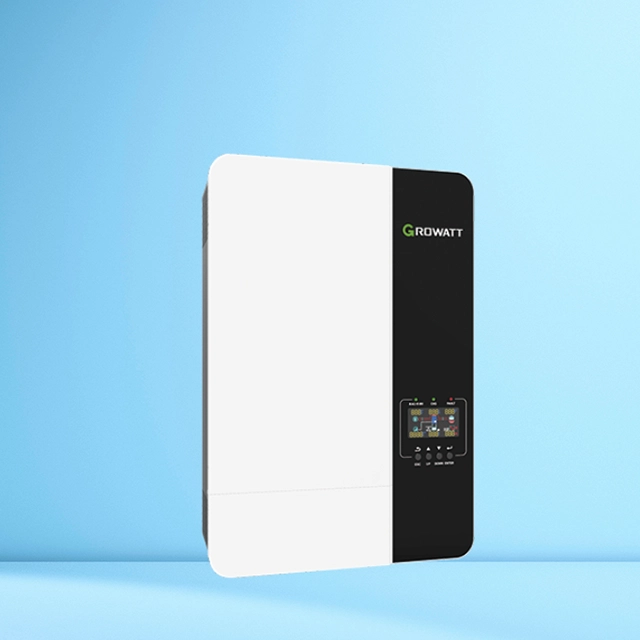
Choosing the right solar inverter is one of the most critical decisions you will make for your renewable energy system. This component acts as the brain of your solar array, converting the direct current (DC) electricity your panels produce into the alternating current (AC) your home uses. For years, the industry standard was a "one-size-fits-all" approach using a single string inverter. However, the rise of modular microinverter architectures has introduced a powerful alternative, sparking a debate about which technology is superior. This decision profoundly impacts your system's energy production, reliability, safety, and long-term return on investment. This article provides a detailed technical and commercial comparison to help you determine the best fit for your specific site conditions, budget, and performance goals, ensuring you select the optimal heart for your solar installation.
Key Takeaways
String Inverters: Best for simple roof layouts with zero shading and lower upfront budgets.
Microinverters: Superior for complex roofs, partial shading, and systems where panel-level monitoring is required.
Reliability: Microinverters eliminate the "single point of a failure" but involve more components on the roof.
Compliance: Microinverters inherently meet NEC rapid shutdown requirements, whereas string inverters may require additional hardware.
The Architectural Difference: Centralized vs. Distributed Conversion
At the core of the debate between microinverters and string inverters is a fundamental difference in system architecture. One approach is centralized, relying on a single device, while the other is distributed, using a modular, per-panel strategy. Understanding this distinction is the first step in selecting the right technology for your solar project.
String Inverter Mechanics
A traditional string inverter system uses a centralized model. Solar panels are connected in series to form a "string," much like old-fashioned holiday lights. Multiple strings are then wired to a single, wall-mounted Photovoltaic Inverter. This device takes the combined high-voltage DC power from all the panels and converts it into AC power for your home.
The primary drawback of this setup is the "Christmas light" effect. Because the panels are in a series circuit, the entire string's performance is limited by its weakest link. If a single panel is shaded by a tree branch, covered in debris, or simply underperforming due to age, the output of every other panel in that string is dragged down to match it. This limitation makes string inverters best suited for large, unshaded roofs where all panels receive uniform sunlight throughout the day.
Microinverter Mechanics
Microinverters represent a shift to a distributed, or decentralized, architecture. In this configuration, a small inverter is installed directly beneath each solar panel on the roof. Each microinverter converts the DC electricity from its single panel into AC electricity right at the source. The AC power from all the microinverters is then combined and sent to your home's electrical panel.
This panel-level conversion has significant advantages. Each solar panel operates independently, so the underperformance of one panel has no impact on the others. A shaded or dirty panel won't affect the production of its neighbors. This independent operation maximizes the energy harvest from each module, making microinverters an ideal solution for complex roofs with multiple orientations, pitches, or intermittent shading issues.
The Middle Ground: Power Optimizers
A third option, power optimizers, offers a hybrid solution. Like microinverters, a power optimizer is a small electronic device attached to each solar panel. However, instead of converting DC to AC, it conditions the DC power from the panel and adjusts the voltage to maximize its energy output before sending it to a centralized string inverter. This approach mitigates most of the shading and mismatch losses associated with traditional string systems while still relying on a single inverter for the final DC-to-AC conversion. It combines the panel-level optimization benefits of microinverters with the cost structure of a string system.
Energy Yield and Shading: How Topology Impacts Real-World Output
The architectural differences between inverter types directly translate into real-world energy production. While a system's nameplate wattage is a starting point, its actual energy yield over 25 years is what determines your return on investment. Factors like shading, panel mismatch, and inverter efficiency play a massive role.
Shading Resilience
Partial shading is the single biggest performance killer for a standard string inverter system. Even "soft shading" from a distant tree, a chimney, or a vent pipe can have a disproportionate impact. In a string system, the inverter's Maximum Power Point Tracker (MPPT) struggles to find the optimal operating point for the entire string when one panel is compromised, leading to significant production losses across all panels in that series.
Microinverters excel in these conditions. Since each panel has its own MPPT, only the shaded panel's output is reduced. The other panels in the array continue to produce at their maximum potential. For properties with unavoidable shading, this resilience can result in 5% to 25% more energy generation over the system's lifetime compared to a string inverter setup.
Mismatch Losses
No two solar panels are perfectly identical. They have slight variations in performance due to manufacturing tolerances. Over time, these differences are amplified as panels age at different rates (degradation). Dust, bird droppings, and leaves can also create a performance mismatch. In a string inverter system, these minor differences cause the entire string to underperform, throttled by the lowest-producing panel. Microinverters eliminate this collective loss by optimizing each panel individually, ensuring you harvest every possible watt.
Clipping and Efficiency
Clipping occurs when solar panels produce more DC power than the inverter is rated to handle. The excess energy is "clipped" off and lost. This is often an intentional design choice based on the DC-to-AC ratio. System designers may oversize the solar array relative to the inverter capacity (e.g., a 1.25:1 ratio) to capture more energy during low-light conditions in the morning and evening, accepting some minor clipping during peak sun hours.
Both microinverters and string inverters can experience clipping if the system is designed this way. However, the efficiency curve of the inverter itself also matters. String inverters are most efficient when operating near their maximum capacity. Microinverters maintain high efficiency across a broader range of power inputs. Over a 25-year lifecycle, the ability of microinverters to efficiently convert power even in low-light conditions can contribute to a higher total energy harvest.
The Reliability Equation: Single Point of Failure vs. Distributed Risk
When investing in a solar energy system, you expect it to perform reliably for decades. The inverter's reliability is paramount, and the two technologies present very different risk profiles and maintenance considerations.
Service Life Expectations
One of the most compelling arguments for microinverters is their lifespan and warranty. Most top-tier microinverters come with a 25-year warranty, designed to match the warranty of the solar panels themselves. They are built with fewer moving parts and are housed in rugged, sealed enclosures to withstand harsh rooftop conditions.
In contrast, standard string inverters typically come with a 10 to 12-year warranty, with options to extend to 15 or 20 years for an additional cost. Because they handle high power loads and generate more heat in a centralized unit, their electronic components tend to have a shorter operational life. This means you should budget for at least one string inverter replacement over the 25-year life of your solar panels.
Failure Impact
The concept of a "single point of failure" is a crucial differentiator.
String Inverter Failure: If your central Photovoltaic Inverter fails, your entire solar array stops producing power until the unit is repaired or replaced. This can lead to significant downtime and lost energy production.
Microinverter Failure: If a single microinverter fails, only the one panel it's connected to stops producing. The rest of your system continues to operate normally. The overall production loss is minimal while you await a replacement.
This distributed risk model makes microinverter systems inherently more resilient. The failure of one small component does not cause a catastrophic system-wide outage.
Maintenance Realities
While the failure impact is lower with microinverters, the maintenance logistics can be more complex. A string inverter is typically mounted on a wall in a garage or on the side of the house, making it easily accessible for a technician to diagnose and replace. The entire process can often be completed in a few hours.
Servicing a failed microinverter requires a technician to get on the roof, unbolt the affected solar panel, replace the microinverter underneath, and then re-install the panel. This process is more labor-intensive and therefore can be more expensive from a service call perspective, even if the replacement part itself is covered under warranty.
Cost Analysis: Balancing Upfront CAPEX with Long-Term OPEX
For many buyers, the decision boils down to cost. It's essential to look beyond the initial price tag (Capital Expenditure, or CAPEX) and consider the Total Cost of Ownership (TCO) over the system's life, which includes maintenance and replacement costs (Operational Expenditure, or OPEX).
Initial Investment
On a pure per-watt basis, string inverter systems almost always have a lower upfront cost. The hardware for a single, centralized inverter is less expensive than purchasing 20 or 30 individual microinverters. For large, simple, utility-scale or commercial projects on unshaded ground, the economic case for string inverters is very strong. For residential systems, the initial price difference can be significant enough to make string inverters an attractive option for budget-conscious homeowners with ideal roof conditions.
Total Cost of Ownership (TCO)
The long-term cost equation is more nuanced. While microinverters are more expensive initially, their 25-year warranty means you likely won't face any replacement costs. For a string inverter system, you must factor in the cost of replacing the inverter at least once, typically around the 12-15 year mark. This future expense, including both the hardware and labor, can erode the initial savings.
Furthermore, the superior energy yield of microinverters in partially shaded or complex roof scenarios can generate more revenue or savings over 25 years, potentially offsetting their higher initial price.
Monitoring Value
A hidden economic benefit of microinverters is the granular, panel-level monitoring they provide. Most microinverter systems come with sophisticated software that allows you to see the real-time and historical performance of every single panel in your array. This makes it incredibly easy to identify a single underperforming panel or a failed unit from your computer or smartphone.
With a string inverter, you typically only see the total system output. If production drops, it's difficult to diagnose whether the issue is a single dirty panel, a faulty module, or a problem with the inverter itself without a costly visit from a technician ("truck roll"). Panel-level data saves time and money on diagnostics and maintenance.
Cost Comparison: String Inverter vs. Microinverter Cost Factor String Inverter Microinverter Upfront Cost (CAPEX) Lower Higher Mid-Life Replacement Cost High (Expected one replacement) None (Covered by 25-year warranty) Labor for Replacement Lower (Easy ground access) Higher (Requires roof access) Diagnostic Costs (OPEX) Higher (Limited data) Lower (Panel-level monitoring) Overall TCO Lower on simple roofs Often lower on complex/shaded roofs Safety and Compliance: Rapid Shutdown and NEC Requirements
Safety is a non-negotiable aspect of any electrical installation. Evolving safety codes, particularly from the National Electrical Code (NEC) in the United States, have significantly influenced inverter technology and selection.
NEC 2017/2020/2023 Standards
The NEC introduced "rapid shutdown" requirements to enhance firefighter safety. In an emergency, first responders need to be able to quickly de-energize the solar panels on the roof. The standards (beginning with NEC 2017 and enhanced in subsequent editions) mandate that conductors within a certain boundary of the array must be reduced to safe voltage levels within 30 seconds of shutdown initiation. This essentially requires module-level power electronics (MLPE) to control each panel individually.
Inherent Safety
Microinverters are inherently compliant with these rapid shutdown rules. Because they convert DC to AC at the panel, there are no high-voltage DC wires running from the roof to a central inverter. When AC power from the grid is cut, each microinverter automatically shuts down, de-energizing its panel. This design is considered fundamentally safer, as it eliminates the risk associated with high-voltage DC circuits, which can create dangerous electrical arcs if damaged.
Additional Hardware Costs
To comply with modern NEC rapid shutdown requirements, a standard string inverter system must be equipped with additional hardware. This typically involves installing a rapid shutdown device (RSD) at each panel or for every pair of panels. These devices add cost and complexity to the installation, increasing the number of components on the roof and narrowing the initial price gap between string and microinverter systems. When comparing quotes, it's crucial to ensure the string inverter option includes the cost of all necessary rapid shutdown hardware.
The Decision Matrix: Choosing Based on Roof Complexity and Scaling
The best choice ultimately depends on your specific circumstances. By evaluating your roof's characteristics and your future plans, you can make a clear-headed decision.
Inverter Technology Decision Matrix Scenario Primary Consideration Recommended Technology Reasoning Simple, South-Facing Roof (No Shading) Lowest Upfront Cost String Inverter Performance limitations are not a factor. Lower CAPEX provides the fastest financial payback. Complex or Shaded Roof (Multiple angles, vents, trees) Maximum Energy Harvest Microinverters Panel-level optimization is non-negotiable to mitigate shading and mismatch losses for best ROI. Planning Future Expansion Scalability Microinverters Adding one or more panels is simple. String inverters have fixed capacity limits and string length requirements. Desire for Detailed Monitoring Data & Diagnostics Microinverters Provides granular, per-panel performance data for troubleshooting and system health tracking. Scenario A: Simple South-Facing Roof
If you have a large, unobstructed, south-facing roof with a consistent pitch, a string Photovoltaic Inverter is often the most logical and cost-effective choice. In this ideal environment, all panels will perform nearly identically, minimizing the downsides of a series connection. The lower upfront cost will lead to a quicker payback period without sacrificing significant performance.
Scenario B: Multi-Faceted or Shaded Roofs
For homes with dormers, multiple roof planes facing different directions (east/west), or partial shading from trees, chimneys, or neighboring buildings, microinverters are the superior choice. Their ability to optimize each panel individually is essential to maximize energy production in such complex environments. The performance gains will almost certainly justify the higher initial investment over the life of the system.
Future-Proofing
Consider your future energy needs. Do you plan to buy an electric vehicle or add an extension to your home? If you might want to expand your solar array later, a microinverter system offers far more flexibility. You can easily add one or more panels at any time. With a string inverter, expansion is complicated. The inverter has a maximum power capacity, and string sizing rules are strict. Adding panels often requires replacing the inverter or adding a second, smaller system.
Conclusion
The choice between microinverters and string inverters is not about which is universally "better," but which is better for your specific project. It is a classic engineering trade-off between the simplicity and low upfront cost of a centralized string system and the superior performance, safety, and flexibility of a distributed microinverter architecture.
Your final decision should be driven by a thorough analysis of your property. Prioritize site-specific constraints, especially roof geometry and shading, over allegiance to a particular brand or technology type. The most reliable way to make an informed choice is to consult with a qualified solar system designer. Ask them to run a performance simulation using software like PVSyst or Helioscope for both inverter options. This data will give you a clear, quantitative forecast of energy production and financial returns, allowing you to choose the perfect inverter for your needs.
FAQ
Q: Can I mix microinverters and string inverters in one system?
A: Generally, this is not done and is highly discouraged. The two systems operate on entirely different principles (one producing AC power at the roof, the other DC) and use different monitoring platforms. While technically possible to have two separate systems on one home, it adds unnecessary complexity and cost. It is far better to choose a single, unified technology for the entire array.
Q: Do microinverters work during a power outage?
A: Standard grid-tied microinverters, like string inverters, will shut down during a power outage for safety reasons (anti-islanding). However, some manufacturers offer specific "sunlight backup" or battery-integrated microinverter systems. These systems can isolate from the grid and continue to provide limited power directly from the sun or from a paired battery when the grid is down.
Q: Which is better for battery storage integration?
A: Both can work well, but they use different methods. String inverters are ideal for DC-coupled batteries, where the battery is charged directly from the panels' DC power, which is highly efficient. Microinverters are used with AC-coupled batteries, where the panels' AC output is converted back to DC to charge the battery. AC-coupling is more flexible and makes it easier to add a battery to an existing microinverter system later.
Q: How does heat affect microinverters under the panels?
A: Heat is a known challenge for all electronics. Microinverters are designed for the harsh rooftop environment and are potted in thermally conductive epoxy to dissipate heat effectively. They undergo rigorous testing to ensure they can operate reliably at high temperatures. While extreme heat can cause temporary power reduction (derating) to protect the components, their distributed nature means a single hot spot won't affect the entire system.


