

- Home
-
-
Grid-Tied vs Off-Grid Photovoltaic Inverters: Key Differences
Views: 0 Author: Site Editor Publish Time: 2026-05-29 Origin: Site
![facebook sharing button]()
![twitter sharing button]()
![line sharing button]()
![wechat sharing button]()
![linkedin sharing button]()
![pinterest sharing button]()
![whatsapp sharing button]()
![kakao sharing button]()
![snapchat sharing button]()
![sharethis sharing button]()
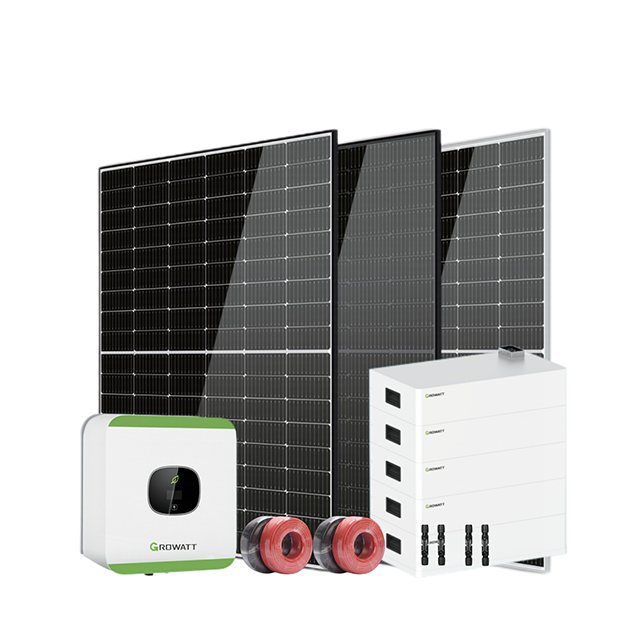
The photovoltaic inverter is the undisputed brain of any solar energy system. It performs the critical conversion of direct current (DC) from the solar panels into alternating current (AC) that powers our homes and businesses. For years, the decision-making process for solar buyers was dominated by a single metric: return on investment (ROI). Today, the conversation has evolved. Homeowners and commercial operators are increasingly prioritizing energy independence, grid resilience, and protection from volatile utility policies. This shift demands a deeper understanding of the core system architectures available. The choice between a grid-tied, off-grid, or the increasingly popular hybrid system dictates not just cost, but a system's performance during an outage, its scalability, and its ability to adapt to a changing energy landscape. This guide will demystify these options, empowering you to make an informed decision.
Key Takeaways
Grid-Tied: Lowest upfront cost; relies on the grid for frequency reference; shuts down during outages (anti-islanding).
Off-Grid: Complete independence; requires significant battery storage and precise load management; higher TCO.
Hybrid (The 2026 "Sweet Spot"): Combines grid connectivity with battery backup; mitigates risks of changing Net Metering policies (NEM 3.0).
Technical Differentiator: Grid-tied inverters sync with the utility’s sine wave, while off-grid inverters must "self-generate" the AC signal.
Technical Architecture: How Each Photovoltaic Inverter Manages Power
The fundamental difference between inverter types lies in how they generate and manage the AC power signal. This core function dictates their capabilities, limitations, and suitability for different applications. It's the technical heart of the grid-tied versus off-grid debate.
Reference Source Logic
An inverter's primary job is to create a clean, stable AC sine wave at a specific voltage and frequency (e.g., 120/240V at 60Hz in North America). How it establishes this reference signal is the key differentiator.
Grid-tied: These inverters are "grid-following." They actively listen to the utility grid, using its existing sine wave as a perfect template. They synchronize their output to match the grid's voltage, frequency, and phase. If the grid disappears, so does their reference point, and they shut down.
Off-grid: These inverters are "grid-forming." Since there is no utility grid to follow, they must create their own stable AC signal from scratch using an internal oscillator. This is a much more demanding task. The inverter must maintain a perfect 50/60Hz frequency and regulate voltage precisely, even when large appliances like an air conditioner or well pump create massive, instantaneous surge loads.
The Anti-Islanding Mandate
A common point of confusion for new solar owners is why their grid-tied system provides no power during a blackout. The reason is a critical safety feature known as "anti-islanding" (mandated by standards like IEEE 1547). An "island" is a dangerous condition where a local solar system continues to energize a section of the grid that utility workers believe is de-energized for repairs. To prevent electrocution risks to line workers, all grid-tied inverters must detect a grid failure within milliseconds and cease exporting power. This is a non-negotiable safety requirement.
AC vs. DC Coupling
When batteries enter the picture for off-grid or hybrid systems, how they connect to the solar array and inverter matters for efficiency. There are two main approaches:
DC Coupling: Solar panels generate DC power, which is stored in a DC battery. When power is needed, the off-grid or hybrid inverter draws from the battery and converts it to AC. The energy only undergoes one conversion. This is generally more efficient for new, integrated systems.
AC Coupling: In this setup, a standard grid-tied solar inverter converts panel DC to AC. This AC power can then be used by the home or sent to a separate battery inverter/charger, which converts it back to DC to store in the battery. To use the stored energy, it's inverted again to AC. This is a common strategy for retrofitting a battery onto an existing grid-tied system.
Economic Evaluation: TCO, ROI, and Policy Volatility
The financial case for solar is no longer a simple calculation. It involves weighing upfront costs against long-term value, which is increasingly influenced by utility rate structures and the need for energy security.
Initial Capital Expenditure (CAPEX)
The upfront cost is the most significant barrier for many, and it varies dramatically between system types.
Grid-tied: This is the most affordable entry point. The essential equipment list is short: solar panels, mounting hardware, and a grid-tied Photovoltaic Inverter. The grid itself acts as an infinite "battery," eliminating the need for expensive energy storage.
Off-grid: This represents the highest capital investment. The system must be robust enough to handle 100% of the property's energy needs, 24/7. The equipment list is extensive: solar panels, a specialized off-grid inverter, a solar charge controller, a large battery bank, and often a backup generator for periods of low sun.
Hybrid systems sit in the middle, adding the cost of a battery bank and a more advanced hybrid inverter to a standard grid-tied setup.
Revenue Streams & Net Billing
For decades, "Net Metering" was the financial engine of grid-tied solar. It allowed customers to export excess solar energy to the grid for a 1-to-1 credit against their consumption, effectively spinning their meter backward. However, this is changing.
Many utilities are shifting to "Net Billing" or "Avoided-cost" compensation models (like California's NEM 3.0). Under these new tariffs, the credit received for exported energy is significantly lower than the retail price of electricity. This drastically changes the economic equation. It makes storing your own solar energy in a battery for use in the evening (self-consumption) far more valuable than exporting it for a low credit. A modern Photovoltaic Inverter with smart export controls and battery integration becomes essential to maximize savings under these new rules.
Maintenance & Lifespan
The operational lifespan and maintenance needs also contribute to the Total Cost of Ownership (TCO).
Grid-Tied Inverters: These units are highly reliable, often with warranties of 10-12 years and an expected lifespan of 10-15 years. Maintenance is minimal, typically involving occasional software updates and ensuring cooling vents are clear.
Off-Grid Systems: The inverter itself can be very durable, but the system's lifeblood—the battery bank—requires diligent care. This includes monitoring charge levels, ensuring proper temperature, and, for some battery chemistries, performing periodic equalization charges. Neglecting battery health can lead to a premature and costly replacement.
Decision Matrix: Evaluating Performance Across Key Dimensions
Choosing the right system requires a clear-eyed assessment of how each architecture performs in different scenarios. The table below provides a high-level comparison.
Dimension Grid-Tied System Off-Grid System Hybrid System Outage Performance Zero power. Shuts down for safety. Uninterrupted 24/7 power, but limited by battery capacity and inverter output. Powers essential loads during an outage. Grid savings when the grid is up. Upfront Cost (CAPEX) Low Very High Medium-High Scalability Easy to add more panels (within inverter limits). Difficult. Inverter, batteries, and charge controller are sized as a complete unit. Moderately easy. Can add more panels and, in many cases, more batteries. Operational Complexity Set and forget. Requires active energy management and battery monitoring. Mostly automated, but monitoring battery health is recommended. Scalability
Expanding a solar system is a common goal. For grid-tied systems, adding a few more panels is often straightforward, as long as the total array size doesn't exceed the inverter's capacity. Off-grid systems are far more rigid. The inverter, charge controller, and battery bank are carefully sized to work in harmony. A significant increase in panel count would likely require a costly overhaul of all major components.
Complexity of Operation
The user experience differs greatly. A grid-tied system is the definition of "set and forget." It operates silently in the background with no user intervention required. In contrast, living off-grid demands a mindset of "active energy management." You must be constantly aware of your energy consumption relative to your battery's State of Charge (SoC). Respecting the recommended Depth of Discharge (DoD) is crucial for maximizing the lifespan of your expensive battery bank.
Implementation Realities: Siting, Compliance, and Lifestyle Adjustments
Beyond the technical and financial aspects, practical considerations on the ground play a huge role in determining the right system for you.
Geographic Constraints
Your location is often the first filter. For properties in urban and suburban areas with reliable utility service, a grid-tied or hybrid system is the default choice. Off-grid systems are typically reserved for remote, rural locations where the cost to extend utility lines is exorbitant (often tens or even hundreds of thousands of dollars) or simply not possible.
Permitting and Interconnection
Connecting to the grid is not a simple plug-and-play process. Grid-tied and hybrid systems must go through a formal interconnection process with the local utility. This involves applications, engineering reviews, multiple inspections, and finally, receiving the "Permission to Operate" (PTO). This bureaucratic journey can take weeks or even months. Off-grid systems generally bypass this utility red tape but may face more stringent local building and electrical code requirements, as they are a primary power source.
Lifestyle Impact
While a grid-tied owner might not even notice their system day-to-day, an off-grid user must adapt their lifestyle. This means being mindful of running multiple high-draw appliances simultaneously. For instance, you might not be able to run an electric clothes dryer while the well pump is filling a water tank, as the combined surge could overload the inverter. Energy conservation becomes a way of life.
Environmental Resilience
Your inverter is a sophisticated piece of electronics that must survive outdoors for over a decade. Its enclosure rating is critical. NEMA 3R ratings are common and protect against rain and sleet. However, in harsh coastal areas with salt spray or dusty desert environments, a more robust NEMA 4X rated enclosure might be necessary to prevent corrosion and ingress. Additionally, all inverters generate heat. In extremely hot climates, proper thermal management—ensuring adequate airflow and sometimes even shading—is vital to prevent the inverter from derating its power output to protect itself.
Selection Logic: Which System Should You Shortlist?
To simplify your decision, consider which of these user profiles best describes your primary motivation for going solar.
The "Financial Optimizer" Profile
If your main goal is to reduce your electricity bill as much as possible and you live in an area with a stable grid and favorable net metering policies, a traditional grid-tied system is your best bet. It offers the lowest upfront cost and the fastest path to a positive return on investment.
The "Resilience Seeker" Profile
If you are concerned about power outages from storms, grid instability, or public safety power shutoffs, you fit this profile. You want the financial benefits of solar but also demand energy security. A hybrid system (solar-plus-storage) is the ideal solution. It bridges the gap perfectly, providing bill savings when the grid is on and seamless backup power when it fails.
The "Total Independent" Profile
This profile applies to those building on a remote property where the cost of grid extension is prohibitive (a common rule of thumb is to consider off-grid if the utility quote exceeds $20k–$50k). For you, an off-grid system is not a choice but a necessity for modern living. The high cost is justified by the even higher cost of the alternative.
Future-Proofing Your Investment
For most people today, the safest choice is a "battery-ready" hybrid Photovoltaic Inverter. This allows you to install a system that operates in a grid-tied fashion initially, keeping upfront costs down. Later, as battery prices fall or utility policies become less favorable, you can easily add energy storage without needing to replace your core inverter. It is the ultimate hedge against future energy price hikes and policy changes.
Post-Installation Success: Critical Performance Checks
Once your system is installed, a few key checks can ensure you're getting the performance and savings you expect.
Grid-Tied Verification
The proof is in your utility bill. After your first full billing cycle, carefully review the statement. You should see a clear accounting of the energy you imported from the grid versus the energy you exported. Verify that the credits for your exported kilowatt-hours match the terms of your net metering or net billing agreement. If something looks wrong, contact your installer immediately.
Off-Grid Health Checks
For an off-grid system, your focus is on battery health. Regular checks are essential for longevity.
Monitor Battery Voltage and Temperature: For modern Lithium Iron Phosphate (LiFePO4) batteries, a fully charged resting voltage is typically between 13.2V and 13.6V. Consistently low voltage can indicate a problem. Also, ensure the batteries operate within their recommended temperature range (often 15°C–35°C) for optimal performance.
Verify Charge Controller Setpoints: Your solar charge controller manages the flow of energy to your batteries. Double-check that its voltage setpoints (for bulk, absorb, and float charging stages) are configured to the exact specifications provided by your battery manufacturer. Incorrect settings can lead to chronic undercharging or dangerous overcharging.
System Stability
A quality inverter should produce a clean AC signal. Under heavy loads, check for signs of instability like flickering lights. In more advanced monitoring, you can check for excessive harmonic distortion. A stable frequency (holding steady at 50Hz or 60Hz) is another sign of a healthy inverter working well within its design limits.
Conclusion
The choice between a grid-tied, off-grid, or hybrid photovoltaic inverter hinges on a fundamental trade-off between cost-efficiency and energy autonomy. Grid-tied systems offer the quickest financial returns but leave you powerless during an outage. Off-grid systems provide complete independence at a significant financial and lifestyle cost. For the vast majority of modern residential and commercial applications, the clear winner is the hybrid solution. It delivers the best of both worlds: substantial savings on utility bills and the invaluable peace of mind that comes with reliable backup power. Before making a final decision, your most critical next step is to consult with a qualified system designer. A professional load-profile analysis will ensure your chosen hardware is perfectly sized for your unique energy needs, guaranteeing success for years to come.
FAQ
Q: Can I turn my grid-tied system into an off-grid system later?
A: Not easily. A standard grid-tied inverter cannot form its own grid signal. However, you can convert a grid-tied system into a hybrid system by adding batteries and a second, battery-based inverter (a technique called AC coupling). This gives you battery backup capabilities. A complete conversion to a true off-grid system would require a major redesign and replacement of the core inverter.
Q: Does a photovoltaic inverter work at night?
A: A standard grid-tied inverter "sleeps" at night because there is no solar production. In a grid-tied home, you draw all your power from the utility grid after the sun goes down. In a hybrid or off-grid system, the inverter remains active 24/7, drawing power from the batteries to run your home at night.
Q: Why is my grid-tied inverter shutting down on sunny days?
A: This is usually caused by high voltage on the local utility grid. On very sunny days, if many solar systems in your neighborhood are exporting power simultaneously, it can push the grid's voltage above the safety limits allowed by the inverter. To protect itself and the grid, the inverter will temporarily shut down. This is an increasingly common issue in areas with high solar penetration.
Q: What is the average ROI for a hybrid vs. grid-tied system?
A: A grid-tied system will almost always have a shorter and simpler ROI calculation, as the initial cost is much lower. The ROI for a hybrid system is more complex. It includes not only the direct electricity bill savings but also the financial value of energy security—the avoided costs and losses associated with a power outage. While the payback period is longer, the overall value proposition, especially under new net billing policies, is often much higher.


