

- Home
-
-
How Photovoltaic Inverters Work: Principles & Efficiency Optimization
Views: 0 Author: Site Editor Publish Time: 2026-05-08 Origin: Site
![facebook sharing button]()
![twitter sharing button]()
![line sharing button]()
![wechat sharing button]()
![linkedin sharing button]()
![pinterest sharing button]()
![whatsapp sharing button]()
![kakao sharing button]()
![snapchat sharing button]()
![sharethis sharing button]()
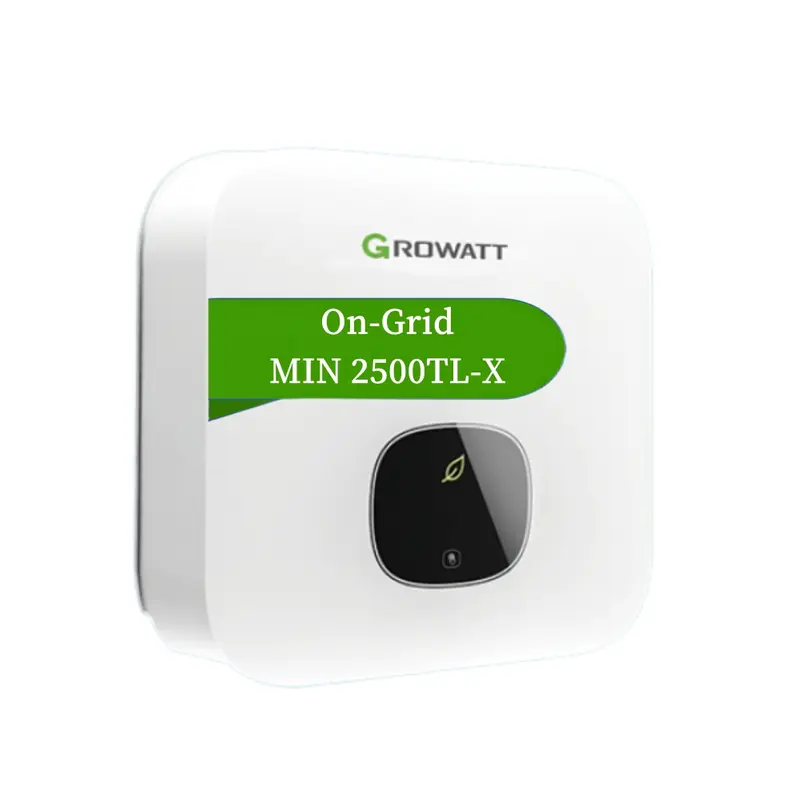
Often called the "brain" of a solar array, the photovoltaic inverter is the critical bridge connecting raw solar energy generation to the usable power that runs our homes and businesses. It performs a task far more complex than simple current conversion. The choice of inverter directly dictates the long-term return on investment (ROI), system uptime, and operational safety of any solar project. A poor selection can cripple the output of even the highest-quality solar panels, leading to significant financial losses over the system's lifespan. This article demystifies the inverter, exploring everything from its internal switching mechanics and core functions to the intelligent optimization strategies that maximize energy harvest. We will cover the different architectures available for commercial and residential applications, helping you make an informed and strategic decision.
Key Takeaways
Core Function: Inverters do more than convert current; they manage Maximum Power Point Tracking (MPPT) and grid synchronization.
Efficiency Benchmarks: Modern transformerless inverters achieve >98% efficiency, but "weighted efficiency" (CEC/Euro) is the truer metric for performance.
Decision Logic: Choosing between string, micro, and hybrid inverters depends on shading profiles, scalability needs, and energy storage goals.
Longevity Factors: Thermal management and component quality (e.g., film vs. electrolytic capacitors) are the primary drivers of the 10–25 year lifespan.
The Physics of Conversion: Internal Working Principles
At its heart, a Photovoltaic Inverter is a sophisticated piece of power electronics. It executes a multi-stage process to transform the variable Direct Current (DC) from solar panels into stable Alternating Current (AC) that is perfectly synchronized with the utility grid. This process relies on precision, speed, and intelligent feedback loops.
The Switching Stage
The conversion process begins at the switching stage. Here, high-speed power transistors—typically Insulated Gate Bipolar Transistors (IGBTs) for larger systems or MOSFETs for smaller ones—act as microscopic switches. They turn on and off thousands of times per second, controlled by a technique called Pulse Width Modulation (PWM). By varying the duration (the "width") of the on-time for these switches, the PWM controller effectively "carves" the smooth, flat DC input into a series of rectangular pulses. This creates a stepped, rough approximation of an AC sine wave.
Filtering and Smoothing
This raw, stepped wave is electrically noisy and unsuitable for powering sensitive electronics or feeding into the grid. The next stage involves a carefully designed filter circuit, primarily composed of inductors and capacitors. The inductors resist rapid changes in current, while the capacitors resist rapid changes in voltage. Together, they work to smooth out the sharp edges of the stepped wave, refining it into a clean, pure sine wave. A key performance metric here is Total Harmonic Distortion (THD), which measures the "purity" of the final AC output. Modern grid-tie inverters are required to have a THD of less than 3% to prevent electrical pollution on the grid.
Maximum Power Point Tracking (MPPT)
A solar panel's power output (wattage) is a product of its voltage and current, which fluctuate constantly with sunlight intensity (irradiance) and temperature. The Maximum Power Point is the unique voltage-current combination where the panel produces the most power at any given moment. An inverter's MPPT circuit acts as an intelligent "tracker." It continuously scans the panel's output and adjusts the electrical load to force the panels to operate at this optimal point. This dynamic adjustment process is crucial for maximizing energy harvest, especially on partly cloudy days when sunlight levels change rapidly.
Grid Synchronization
For a grid-tied system, the inverter must act as a perfect citizen of the utility grid. Before injecting any power, it uses a Phase-Locked Loop (PLL) circuit to precisely match the phase, frequency (e.g., 60 Hz in North America, 50 Hz in Europe), and voltage of the grid's AC waveform. This ensures a seamless and safe transfer of power. This function also includes a critical safety feature known as "anti-islanding." If the utility grid experiences an outage, the inverter must immediately stop exporting power. This prevents it from energizing downed power lines and creating a hazard for utility workers performing repairs.
Strategic Classification: Matching Inverter Architecture to Site Realities
There is no one-size-fits-all inverter. The optimal choice depends entirely on the project's specific conditions, including roof layout, shading issues, budget constraints, and future goals like energy storage. Each inverter architecture offers a distinct set of trade-offs.
String Inverters
String inverters are the industry workhorse, particularly for residential and small commercial projects with unshaded, uniformly oriented solar panels. In this setup, multiple solar panels are connected in series to form a "string," and one or more strings connect to a single, centralized inverter. They are cost-effective and easy to maintain since the main unit is typically installed in an accessible location like a garage or exterior wall. However, their primary drawback is that the output of the entire string is limited by its weakest-performing panel. If even one panel is shaded or soiled, the power output of all other panels in that string is reduced.
Micro-Inverters & DC Optimizers
Known collectively as Module-Level Power Electronics (MLPE), these technologies solve the "weakest link" problem of string inverters.
Micro-inverters are small, individual inverters installed directly on the back of each solar panel. They convert DC to AC at the source, meaning each panel operates independently.
DC Optimizers are also installed at each panel, but they do not convert to AC. Instead, they condition the DC power and feed it to a simplified central string inverter.
Both solutions are ideal for complex roofs with multiple angles, orientations, or significant shading challenges. They allow for granular, panel-level monitoring and can increase overall energy harvest. The main trade-offs are higher upfront costs and more complex installations with more components located on the roof.
Hybrid (Storage-Ready) Inverters
As energy storage becomes more popular, hybrid inverters are gaining prominence. These devices combine the functionality of a grid-tie solar inverter and a battery inverter into a single unit. They can intelligently manage the bi-directional flow of energy between solar panels, batteries, the home or business, and the grid. This allows system owners to store excess solar energy for use at night or during a power outage, providing a path to greater energy independence. While more expensive than standard grid-tie models, they are the go-to solution for new systems where battery backup is a current or future requirement.
Centralized Inverters
Centralized inverters are the titans of the solar industry, designed for utility-scale solar farms and massive commercial projects. A single central inverter can handle hundreds of kilowatts or even megawatts of power. They are built for extreme durability and efficiency at high capacity, often accepting high DC input voltages (up to 1500V) to minimize electrical losses over long cable runs. Their design prioritizes ruggedness, grid support features, and ease of large-scale maintenance over the granular optimization found in MLPE.
Inverter Type Comparison Feature String Inverter Micro-Inverter / Optimizer Hybrid Inverter Central Inverter Best Use Case Unshaded, simple roofs Complex roofs, shading issues Systems with battery storage Utility-scale solar farms Cost Low High High Low (per watt) Shade Tolerance Poor Excellent Poor to Good (depends on pairing with optimizers) Poor (mitigated by string design) Monitoring System-level Panel-level System & Battery level String/Array level Maintenance Centralized, easy access On-roof, component level Centralized, easy access Centralized, requires specialists Efficiency Optimization: Beyond the Data Sheet
An inverter's efficiency rating is a critical metric, but the number on the spec sheet doesn't tell the whole story. True optimization involves understanding the underlying technology, control strategies, and thermal management that influence real-world performance.
Transformerless vs. Transformer-Based
Older inverter designs used a large, heavy low-frequency transformer for galvanic isolation and to step up the voltage. While reliable, these transformers generate heat and introduce energy losses. Modern transformerless inverters use advanced electronics and high-frequency switching to achieve the same goals. By removing the bulky transformer, these units can achieve efficiencies 1-2% higher, are significantly lighter, and generate less waste heat. The trade-off is that they require more sophisticated electronic grounding and fault protection systems to ensure safety.
Intelligent Control Strategies
The brain of the inverter is its control algorithm. As solar technology advances, these algorithms are becoming increasingly intelligent to squeeze out every possible watt-hour.
Fuzzy Logic & AI: Traditional controllers (like PI controllers) work well under stable conditions but can struggle with the rapid, non-linear changes caused by passing clouds. Advanced inverters are beginning to incorporate artificial intelligence and fuzzy logic. These systems can better predict and react to complex weather patterns, optimizing MPPT performance in ways traditional algorithms cannot.
Droop Control: In off-grid or microgrid scenarios with multiple inverters working in parallel, communication between units is key to balancing the load. Droop control is a strategy that allows inverters to operate together without needing high-speed communication. Each inverter slightly reduces its output frequency as its load increases, mimicking the behavior of traditional generators and enabling stable, decentralized load sharing.
Thermal Management
Heat is the enemy of all electronics, and inverters are no exception. An inverter's ability to dissipate the heat it generates during operation directly impacts its performance and lifespan. When an inverter gets too hot, it will engage in "derating"—intentionally reducing its power output to protect its internal components. This is why thermal management is so critical.
Passive Cooling: Smaller inverters often rely on passive cooling, using large external heatsinks with fins to radiate heat into the surrounding air. This is silent and reliable but can be limited in very hot climates.
Active Cooling: Larger inverters typically use active cooling with internal or external fans to force air across the heatsinks. This is more effective at removing heat but introduces a mechanical point of failure (the fan) and consumes a small amount of power.
Proper installation—ensuring adequate airflow and avoiding direct sunlight—is paramount for any inverter to prevent thermal derating.
Evaluation Framework: Technical Indicators for Procurement
When selecting a Photovoltaic Inverter, you must look past marketing claims and evaluate key technical specifications that reveal its true performance capabilities and safety credentials.
Weighted Efficiency Metrics
"Peak Efficiency" is the highest efficiency an inverter can achieve under ideal laboratory conditions. This is a useful but often misleading metric. "Weighted Efficiency," such as the California Energy Commission (CEC) or European efficiency ratings, provides a much more realistic picture. These metrics measure efficiency across a range of power outputs that simulate a typical day's variable sunlight, giving a better indication of real-world energy harvest.
Voltage Adaptability
Two voltage specifications are crucial for maximizing the production day:
Start-up Voltage: This is the minimum DC voltage required from the solar panels for the inverter to turn on. A lower start-up voltage means the system will begin producing power earlier in the morning and continue later into the evening.
MPPT Voltage Range: This is the range of DC voltages within which the inverter's MPPT can operate effectively. A wider range gives the system designer more flexibility in creating string lengths and ensures the inverter can optimize power output across a broad spectrum of temperatures and light conditions.
Total Harmonic Distortion (THD) & Power Factor
These metrics are especially important for commercial and industrial applications. As mentioned, THD measures the purity of the AC output. A low THD (<3%) is essential to prevent interference with other sensitive equipment on the same circuit. Power Factor is a measure of how effectively the inverter uses current from the grid (or delivers it). A power factor close to 1.0 indicates high efficiency. Utilities often penalize large commercial customers for poor power factor, making this a critical financial consideration.
Protection Suites
A modern inverter is also the safety hub of the solar array. Look for a comprehensive suite of built-in protections, which are often required by electrical codes.
DC Arc Fault Protection (AFCI): Detects and interrupts dangerous electrical arcs in the DC wiring, which can be a fire hazard.
Surge Protection Devices (SPD): Protects the inverter from voltage spikes caused by lightning or grid fluctuations.
Ground Fault Detection (GFDI): Monitors for unintended electrical paths to the ground, shutting the system down to prevent shock hazards.
Implementation & TCO: Reliability and Lifecycle Management
The initial purchase price of an inverter is only one part of its total cost. True Total Cost of Ownership (TCO) considers reliability, maintenance, and expected lifespan, all of which are influenced by component quality and installation practices.
The "Capacitor Gap"
One of the most common failure points in an inverter is its capacitors, which are essential for smoothing power flow. There are two main types:
Electrolytic Capacitors: These are less expensive but contain a liquid electrolyte that can dry out over time, especially when exposed to heat. They are often the limiting factor that gives many string inverters a 10-15 year design life.
Thin-Film Capacitors: These are more expensive, solid-state components that are far more resistant to heat and degradation. They are a key reason why premium inverters and micro-inverters can offer warranties of 20-25 years.
Understanding this component choice helps explain the difference in lifespan and warranty between various models.
Installation Environment
The physical location of the inverter has a direct impact on its longevity. An inverter installed in a cool, dry, well-ventilated garage will almost certainly outlast an identical unit mounted on a sun-baked south-facing wall with poor airflow. For coastal installations, it's critical to select an inverter with a NEMA 4X or equivalent rating that indicates protection against corrosion from salt-mist. Premature component failure is frequently linked to poor installation environments.
O&M and Monitoring
Modern solar operations and maintenance (O&M) have shifted from a reactive "break-fix" model to a proactive, data-driven approach. Cloud-based monitoring platforms, now standard with most inverters, allow owners and installers to track performance in real-time. This enables early detection of problems, often before they cause significant production loss. Furthermore, many inverters now support remote firmware updates, allowing manufacturers to deploy performance improvements and security patches without a costly site visit.
Warranty Realities
When evaluating warranties, it is crucial to read the fine print. You need to distinguish between a "product warranty" and a "service/labor warranty."
A product warranty covers the cost of a replacement unit if the original fails within the specified period (e.g., 10, 15, or 25 years).
A service/labor warranty covers the cost of the technician's time to diagnose the problem, remove the old unit, and install the new one.
Many manufacturers offer a product warranty but only a limited labor reimbursement for the first few years. Understanding this distinction is essential for accurately calculating the long-term TCO.
Conclusion
The journey from raw DC sunlight to usable AC power is a testament to sophisticated engineering, and the inverter is at the center of it all. We have seen that the "best" inverter is not simply the one with the highest peak efficiency on a data sheet. Instead, it is the one whose architecture, features, and reliability profile strategically align with the specific realities of your site, your budget, and your long-term energy goals. As technology evolves, we see the rise of "Smart Inverters" capable of actively stabilizing the grid, transforming them from simple power converters into dynamic grid assets. Ultimately, a successful solar investment hinges on a holistic system design that prioritizes the synergy between panels, inverter, and site conditions over any single component specification.
FAQ
Q: What is the average lifespan of a photovoltaic inverter?
A: The lifespan varies by type. Centralized string inverters typically last 10 to 15 years, as their warranties often reflect. Their longevity is often limited by components like electrolytic capacitors and fans. Micro-inverters and DC optimizers, which operate in less stressful conditions and often use more durable components like thin-film capacitors, frequently come with warranties of 25 years, matching the lifespan of the solar panels themselves.
Q: Can I use a grid-tie inverter during a power outage?
A: Generally, no. Standard grid-tie inverters are required by safety regulations (anti-islanding) to shut down during a grid outage to protect utility workers. To have power during an outage, you need a system with "backup" or "islanding" capabilities. This functionality is typically found in hybrid inverters paired with a battery storage system, which can create a stable, independent local grid for your home or business.
Q: How do I size an inverter relative to my solar array?
A: The relationship is expressed as the DC-to-AC ratio, or Inverter Loading Ratio (ILR). This is the solar panel array's DC power rating divided by the inverter's maximum AC power output. It is common practice to "oversize" the DC array relative to the inverter, with typical ratios between 1.1 and 1.5. This allows the inverter to reach its peak output earlier in the day and produce more total energy, even though some potential power may be "clipped" during peak sun hours.
Q: What causes most inverter failures?
A: The primary causes are environmental stress and internal component wear. Excessive heat is the number one enemy, causing premature aging of electronic components. Moisture intrusion from failed seals can also lead to short circuits and corrosion. Internally, the most common points of failure are the components that handle the most stress: power transistors (IGBTs/MOSFETs) and capacitors, especially electrolytic types that degrade over time.
Q: Is a higher efficiency rating always worth the extra cost?
A: Not always. You have to analyze the point of diminishing returns. The energy gain from a 0.5% efficiency improvement (e.g., going from 98.0% to 98.5% weighted efficiency) might be very small over a year. You should calculate the value of that extra energy produced over the inverter's lifetime and compare it to the upfront price premium. In many cases, investing that extra money in a more robust warranty or a better brand reputation may provide a greater long-term return.


