- Home
-
-
Is Rooftop Solar Still Worth It?
Views: 0 Author: Site Editor Publish Time: 2026-07-25 Origin: Site
![facebook sharing button]()
![twitter sharing button]()
![line sharing button]()
![wechat sharing button]()
![linkedin sharing button]()
![pinterest sharing button]()
![whatsapp sharing button]()
![kakao sharing button]()
![snapchat sharing button]()
![sharethis sharing button]()
Homeowners face an increasingly volatile energy landscape today. Rising utility rates continuously squeeze monthly household budgets. At the same time, shifting net metering policies and fluctuating interest rates complicate major home upgrade decisions. You might wonder if installing panels still makes financial sense in this climate. The answer is no longer a universal "yes" or "no" for everyone. Instead, it demands a highly localized, precise financial calculation. Every property has unique variables affecting potential returns.
This article provides a clear, evidence-based framework for your evaluation. We will help you determine if a rooftop solar system makes financial and operational sense for your specific home right now. You will learn how to analyze hardware longevity, navigate grid connection rules, and evaluate installer quotes confidently. This knowledge ensures you make an informed, profitable energy investment.
Key Takeaways
ROI depends on local variables: Break-even points typically range from 6 to 10 years, heavily dictated by state policies and local electricity rates.
Not for every roof: Shading, poor roof conditions, or plans to move within 5 years actively disqualify properties from achieving a positive return.
Equipment dictates longevity: The financial model relies on high-quality solar modules degrading at less than 0.5% annually.
Grid connection rules are shifting: The financial viability of a grid-connected solar system increasingly depends on self-consumption and battery storage integration rather than 1:1 utility buybacks.
The Financial Math Behind a Rooftop Photovoltaic System
Understanding the exact numbers forms the foundation of any wise energy upgrade. You must look past the initial price tag. True value emerges when you analyze long-term generation against projected utility costs. Evaluating a rooftop photovoltaic system requires strict mathematical discipline rather than emotional guesswork.
First, define your payback period. You calculate this using a standard formula. Divide your total system cost after incentives by your annual electricity savings. If you spend $15,000 out of pocket and save $2,000 annually, your payback period is 7.5 years. Most successful installations achieve this break-even point between six and ten years. Anything stretching beyond twelve years requires careful reconsideration.
Next, you must compare upfront costs against the Levelized Cost of Energy (LCOE). LCOE represents your locked-in cost per kilowatt-hour (kWh) over a 25-year lifespan. You divide the total lifetime system cost by the total lifetime energy production. If your solar LCOE sits at 8 cents per kWh, and your utility charges 22 cents per kWh, you secure a massive advantage. You also protect yourself against projected utility rate hikes. Historically, utility rates increase by roughly 3% to 5% annually.
Financing methods drastically impact your actual returns. Cash purchases always yield the highest lifetime savings. You avoid interest fees entirely. Conversely, high-interest solar loans erode your potential profit. A 20-year loan at an 8% interest rate can consume up to 40% of your potential return on investment (ROI). You must frame your assumptions clearly before signing any agreement.
Finally, consider your opportunity cost. If you did not buy panels, you could invest that cash elsewhere. You should compare projected solar savings against conservative index fund returns. Often, solar energy savings outpace traditional market returns due to compounding utility rate inflation, but you must run the math for your specific tax bracket and local power costs.
When to Walk Away: The Skeptic’s Checklist
Solar energy works beautifully in the right conditions. However, many homes simply lack the necessary physical or financial baseline. You must recognize when to reject an installation project. Aggressive salespeople often ignore glaring red flags. Use this checklist to protect your finances.
Roof Age and Condition: Inspect your roof carefully. If it needs replacement within the next five to ten years, do not install panels now. You will face heavy costs to remove and reinstall the entire system during the roof replacement. These secondary labor costs quickly negate your early energy savings.
Suboptimal Sun Exposure: Analyze your physical environment. Heavy tree shading ruins generation efficiency. Roof azimuth also plays a critical role. In the Northern Hemisphere, north-facing roofs capture drastically less sunlight. Complex roof angles and dormers also limit the number of panels you can seamlessly install.
Low Local Electricity Rates: Check your current utility bill. Some regions enjoy exceptionally cheap grid power. If you currently pay less than 10 cents per kWh, your break-even timeline extends beyond acceptable limits. The savings simply trickle in too slowly to justify the heavy upfront capital expense.
Short-Term Homeownership: Evaluate your future living plans. If you plan to sell your home within five years, walk away. You should never rely on increased property value to immediately offset a freshly installed system. Real estate markets fluctuate. Buyers might not pay a premium for your specific energy setup.
![rooftop photovoltaic system]()
Hardware Evaluation: Solar Modules, Inverters, and Warranties
Your financial model relies entirely on equipment durability. Cheaper components fail faster and degrade quicker. You must understand the distinct hardware categories before authorizing an installation.
The panel technology matters most. You should demand Tier 1 monocrystalline solar modules. These units outperform older polycrystalline technologies in almost every metric. Pay close attention to temperature coefficients. This metric dictates how much efficiency the panel loses on extremely hot days. Lower numbers indicate better heat tolerance. Furthermore, verify the annual degradation rate. Premium panels degrade at less than 0.5% per year. This ensures they still produce ample power two decades later.
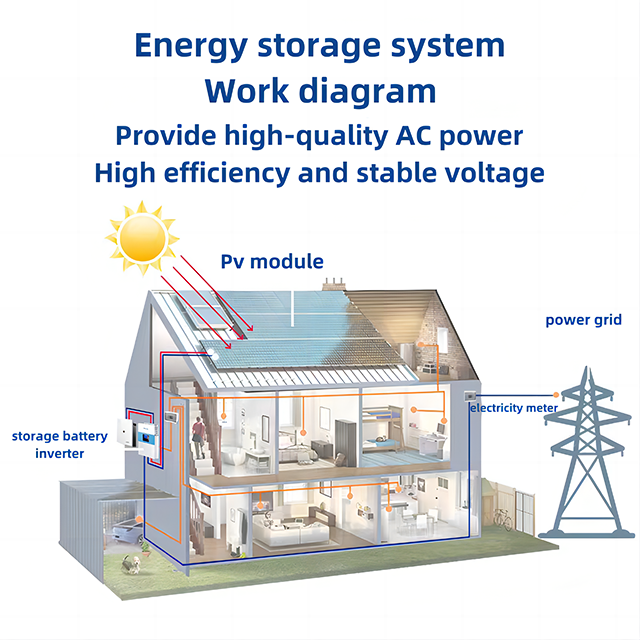
Next, evaluate the inverter architecture. Inverters convert DC power from the panels into usable AC power for your home. You generally choose between two primary setups.
Feature
String Inverters
Microinverters / Power Optimizers
Architecture
Connects all panels in a single series circuit.
Attaches individual units to each specific panel.
Shading Impact
Shading on one panel drops the output of the whole string.
Shading only affects the specific covered panel.
Upfront Cost
Lower initial hardware expense.
Higher initial capital investment.
Maintenance
Easier to replace one central unit if it fails.
Requires climbing onto the roof to fix individual units.
Finally, rigorously evaluate the warranties. Warranties represent the ultimate trust factor. You need comprehensive protection across three distinct categories:
Product Warranty: This covers physical defects and manufacturing flaws. Aim for contracts offering 15 to 25 years of coverage.
Performance Warranty: This guarantees a specific output threshold at Year 25. High-quality manufacturers guarantee 85% or more of original capacity by the end of the term.
Workmanship Warranty: This covers roof leaks, faulty wiring, and installation errors. This serves as the critical differentiator among local installers. Seek a minimum 10-year workmanship guarantee.
Navigating the Grid-Connected Solar System Landscape
Installing hardware represents only half the battle. Your relationship with the local utility company dictates your ultimate financial success. A modern grid-connected solar system operates under complex, shifting regulatory frameworks. You must understand these rules thoroughly.
Net Energy Metering (NEM) policies are changing nationwide. Historically, NEM 1.0 and 2.0 offered retail-rate compensation. The utility bought your excess solar power at the same price they sold it to you. This 1:1 ratio made ROI calculations incredibly simple. Today, many states mandate NEM 3.0 style policies. These frameworks shift to avoided-cost rates. Utilities now pay you a fraction of the retail rate for your exported power. This fundamental shift severely damages the ROI of traditional, export-heavy setups.
Because of these policy shifts, battery storage demands careful consideration. You must decide if a battery is a financial necessity or a luxury expense. Under aggressive Time-of-Use (TOU) rates, electricity costs spike during evening hours. Batteries allow you to store daytime solar production and consume it during peak evening hours. This avoids expensive grid purchases entirely. Furthermore, batteries provide critical resilience in areas suffering from weak grid infrastructure and frequent blackouts. However, if your region still offers 1:1 net metering and experiences rare outages, a battery remains an unnecessary luxury expense.
Federal and local incentives drastically improve your financial outlook. The federal Investment Tax Credit (ITC) currently allows you to deduct 30% of your installation costs from your federal taxes. However, you must maintain a transparent view of this benefit. It is a non-refundable tax credit. It only offsets taxes you actually owe. If your tax liability is low, you cannot realize the full savings in year one. Additionally, research state-level rebates and Solar Renewable Energy Certificates (SRECs). SRECs allow you to sell the "green" attributes of your generated power, creating an additional revenue stream in participating states.
From House to Solar Power Station: Shortlisting and Implementation Quotes
Transforming your property into a reliable solar power station requires strict vendor vetting. The installation industry contains both elite professionals and predatory sales organizations. You protect yourself by demanding transparency and comparing multiple offers.
Always employ the "Rule of Three." You must evaluate at least three distinct quotes from different companies. This practice remains mandatory. Multiple quotes expose price gouging instantly. They also highlight unrealistic generation estimates. If one company promises 30% more power production than the others using the same roof space, they are likely manipulating the software to close the sale.
Learn to spot predatory sales tactics immediately. Red flags abound in this industry. Beware of "free solar" claims heavily promoted on social media. You never get free hardware; these ads disguise expensive, restrictive lease agreements. Watch out for high-pressure signing deadlines. Legitimate installers do not force you to sign a contract on the same day. Additionally, scrutinize the inflation math inside their proposal. Predatory reps often assume an unrealistic 6% or 7% annual utility rate inflation. This artificially inflates your projected lifetime savings, making their high price look reasonable.
Evaluating the installer holds equal importance to evaluating the hardware. Treat the installer interview like a job interview. First, verify their certifications. Ensure lead electricians carry NABCEP (North American Board of Certified Energy Practitioners) certification. This serves as the industry gold standard. Second, review their history with local permitting offices. Experienced local crews navigate bureaucratic red tape swiftly, preventing months of delays. Finally, ask about their labor force. Prioritize companies using in-house crews over those relying on subcontracted labor. In-house teams deliver consistent quality and simplify warranty claims down the road.
Conclusion
Deciding to install panels requires rigorous evaluation of your specific circumstances. A profitable solar investment rests on a strict baseline. You need a sturdy roof, consistently high utility bills, and favorable local interconnection policies. If your property meets these criteria, harnessing solar energy offers incredible financial leverage against rising energy costs.
Remember, this is a 25-year infrastructure project. You are building a localized power plant on your property. It is not a short-term financial flip. You must prioritize high-quality hardware and reputable installation partners over the absolute lowest upfront price. Quality ensures longevity, and longevity guarantees your ROI.
Take actionable steps today to verify your viability.
Gather your last twelve months of utility bills to understand your exact usage.
Use a reputable, localized solar calculator to establish a rough baseline for your region.
Request standardized quotes from three local, certified installers.
Plug their specific numbers into this framework to reveal your true payback period.
FAQ
Q: Does a rooftop solar system increase home insurance premiums?
A: Yes, it generally causes a modest increase. Your panels represent a valuable physical asset attached to your dwelling. You must increase your dwelling coverage limits to protect against hail, fire, or wind damage. However, the premium bump is typically minor. Always contact your insurance agent before installation to confirm specific policy changes and ensure full replacement cost coverage.
Q: What happens to my solar panels if I sell my house?
A: If you purchased the system with cash or a standard loan, it transfers easily. The system adds equity to the home, and the new buyer assumes ownership of the panels directly. However, if you lease the panels or use a Power Purchase Agreement (PPA), transferring the contract becomes complicated. The new buyer must qualify for and agree to take over the remaining lease terms.
Q: How much maintenance does a residential system actually require?
A: Real-world upkeep costs remain remarkably low. Panels contain no moving parts. You generally need to clean them once or twice a year, depending on local dust and pollen levels. Rain often handles routine rinsing. The only significant maintenance event involves the inverter. String inverters typically require replacement between year 12 and 15, so budget for this single future expense accordingly.