

- Home
-
-
Photovoltaic Inverter Technology: DC To AC Conversion
Views: 0 Author: Site Editor Publish Time: 2026-06-01 Origin: Site
![facebook sharing button]()
![twitter sharing button]()
![line sharing button]()
![wechat sharing button]()
![linkedin sharing button]()
![pinterest sharing button]()
![whatsapp sharing button]()
![kakao sharing button]()
![snapchat sharing button]()
![sharethis sharing button]()
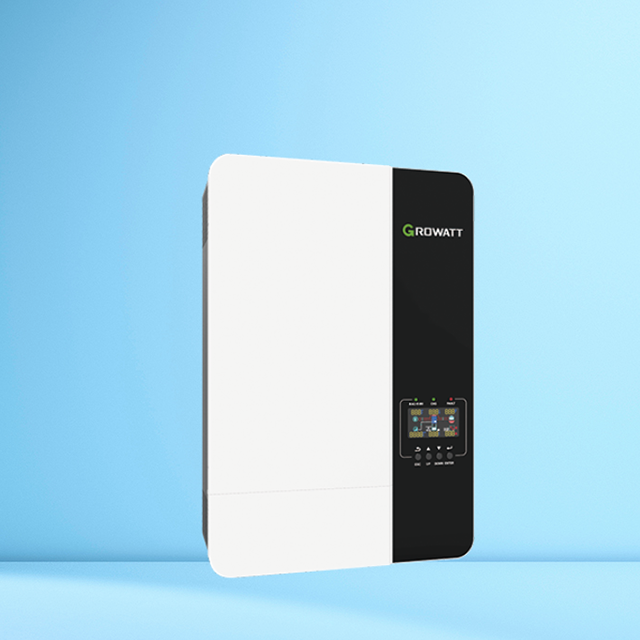
Every solar energy system, regardless of scale or configuration, depends on a critical component that transforms direct current from photovoltaic modules into alternating current compatible with electrical grids and building loads: the photovoltaic inverter. While solar modules capture sunlight and convert it to electricity, the inverter determines how much of that captured energy is actually usable. Inverter technology represents one of the most dynamically evolving segments of the solar industry, with continuous advances in conversion efficiency, grid support capabilities, and intelligent management features that directly determine how much usable energy a solar installation produces.
Understanding photovoltaic inverter technology equips procurement engineers, system designers, and project developers with the knowledge to select appropriate inverter solutions, optimize system configurations, and future-proof solar investments against evolving grid requirements. The inverter typically represents 10% to 15% of total system cost but has an outsized impact on system performance, reliability, and total energy yield over the system's lifetime.
What Is a Photovoltaic Inverter
A photovoltaic inverter is an electronic power conversion device that transforms the direct current (DC) output of solar modules into alternating current (AC) electricity that powers homes, businesses, and feeds into electrical grids. Beyond basic conversion, modern inverters perform numerous grid-supporting functions that are essential for safe, reliable system operation: maximum power point tracking that maximizes energy harvest, power quality management that prevents harmonic distortion, anti-islanding protection that protects utility workers, and communication with monitoring platforms that enable remote diagnostics.
The inverter serves as the brain and bridge of the solar power system, continuously adjusting electrical operating conditions to find and maintain the maximum power point of the photovoltaic array—a process that occurs hundreds of times per second as light conditions change due to passing clouds, soiling, or temperature variations. Grid-tied inverters synchronize their AC output frequency and voltage to match the utility grid precisely, while off-grid inverters must generate their own AC waveform for standalone systems that operate independently of the grid.
Inverter selection significantly impacts overall system efficiency, degradation patterns, and operational flexibility. The wrong inverter choice can reduce a system's energy yield by 5% to 10% compared to an optimally selected alternative, costing thousands of dollars in lost energy production over the system's lifetime. Leading manufacturers including GROWATT have developed specialized inverter lines that balance conversion performance, reliability, and grid compliance across residential, commercial, and utility-scale applications. GROWATT SPF series inverters, for example, integrate photovoltaic conversion with battery management capabilities for residential and small commercial applications requiring energy storage support, providing a unified platform for both solar generation and battery storage optimization.

Types of Photovoltaic Inverters
String Inverters
String inverters represent the most widely deployed inverter topology for utility-scale and commercial solar installations globally. Multiple photovoltaic modules are connected in series strings, with the combined DC output from typically 10 to 30 modules fed to a centralized inverter that performs the DC-to-AC conversion. String inverters offer high reliability due to their mature, proven technology, cost-effectiveness through economies of scale and reduced component count, and straightforward maintenance since the inverter unit is typically ground-level or in accessible locations.
Modern string inverters incorporate multiple independent maximum power point tracking (MPPT) channels, enabling optimized performance even when module strings have different orientations, tilt angles, or shading conditions. Independent MPPT channels prevent a poorly performing string from dragging down the entire array's production. GROWATT string inverters, including models with power ratings from 3 kW to 250 kW, feature dual or triple MPPT channels and advanced grid support functions that address diverse installation requirements across residential, commercial, and utility-scale applications.
Microinverters
Microinverters are small power electronics devices installed on each individual module, converting DC to AC at the module level rather than at a centralized location. This architecture provides module-level maximum power point tracking, eliminating the performance impact of mismatch between modules or partial shading on any single panel. When one module is shaded, only that module's production is affected—the rest of the system continues operating at full capacity.
Microinverter systems offer superior energy harvest in complex roof layouts with multiple orientations, shaded environments where trees or buildings cast shadows at different times, or installations where panels face different compass directions. They also simplify system expansion (adding panels is straightforward without redesigning the entire string configuration) and provide granular monitoring data at the individual module level that enables precise performance tracking and rapid fault identification. The trade-off includes higher initial cost per watt compared to string inverters and distributed electronics that may experience different failure profiles requiring more complex maintenance.
Power Optimizers
Power optimizers are module-level DC-DC converters installed adjacent to each module, performing module-level MPPT and voltage conditioning before sending optimized DC power to a central string inverter. This hybrid architecture combines the cost advantages of string inverters with the module-level optimization benefits of microinverters.
Power optimizers enable rapid shutdown compliance required by the 2017 National Electrical Code (NEC 690.12) for fire safety, as each optimizer can individually reduce module voltage to below 80V within seconds of a shutdown command. They also provide module-level monitoring and allow string lengths to be more flexible compared to conventional string inverter designs.
Hybrid Inverters and Battery Storage Integration
Hybrid inverters are designed to manage both photovoltaic generation and battery storage within a unified system architecture. They direct excess solar power to battery banks for later consumption during evening hours or grid outages, manage grid charging and discharging cycles based on electricity rate structures and user preferences, and provide backup power capabilities that maintain electricity supply when the grid fails.
The GROWATT SPF series represents a category of hybrid inverters that integrate photovoltaic conversion with battery management, offering homeowners and small commercial operators a pathway to greater energy independence and resilience. These inverters automatically optimize the balance between immediate self-consumption, battery storage charging and discharging, and grid export based on configurable user preferences and real-time utility rate structures.
Core Benefits of Advanced Photovoltaic Inverter Technology
High Conversion Efficiency
Modern inverters achieve peak conversion efficiencies exceeding 98%, meaning that less than 2% of DC power is lost during the conversion process from photovoltaic DC to grid-compatible AC. European efficiency—a weighted average that reflects typical operating conditions throughout the day, including partial load conditions when inverters operate below rated capacity—typically ranges from 97% to 98% for premium products.
Higher efficiency translates directly into more usable AC energy from the same photovoltaic array. For a 10 kW system producing 15,000 kWh annually, improving average efficiency from 96% to 98% recovers approximately 300 kWh per year—small per unit but significant at scale. The efficiency advantage of premium inverters compounds over decades of operation.
Intelligent Maximum Power Point Tracking
Maximum power point tracking (MPPT) algorithms continuously adjust the electrical operating point of the photovoltaic array to extract maximum available power under varying irradiance, temperature, and partial shading conditions. The I-V curve of a photovoltaic array has a single maximum power point where the product of voltage and current is maximized—MPPT algorithms find and maintain this point despite continuously changing conditions.
Advanced MPPT algorithms including perturb-and-observe, incremental conductance, model-based predictive techniques, and dynamic sweep methods improve energy harvest by 1% to 5% compared to basic implementations. In partially shaded conditions, advanced algorithms that explore the entire I-V curve can identify multiple local maximum power points and select the global maximum, recovering significant energy that basic algorithms would miss.
Grid Support and Stability Functions
Modern inverters must provide sophisticated grid support functions specified in grid connection standards including IEEE 1547 in North America, VDE-AR-N 4105 in Germany, and similar standards globally. These functions include reactive power control that supports grid voltage stability, low-voltage and high-voltage ride-through that keeps inverters connected during grid disturbances, frequency response capabilities that inject or absorb power based on grid frequency deviations, and active power limitation that reduces output on command from the grid operator.
Inverters from established manufacturers continuously update their grid code compliance through firmware updates that reflect evolving grid operator requirements. This over-the-air update capability extends the functional life of inverter investments while ensuring ongoing grid compliance.
Advanced Monitoring and Diagnostics
Digital inverter platforms offer comprehensive monitoring capabilities including real-time power output tracking, cumulative energy yield logging, event logging that records faults and disturbances, and remote diagnostics that enable technicians to identify issues without visiting the site. Integration with cloud platforms provides access to system data from any location via web browser or mobile application.
Sophisticated monitoring platforms enable proactive maintenance by alerting operators to performance deviations before they escalate into failures. A 5% decline in performance ratio, while imperceptible to the system owner, may indicate developing problems that, if addressed early, prevent more serious failures.
Photovoltaic Inverter Technology: How It Works
Understanding the conversion process illuminates why inverter selection carries such significant performance implications for the overall solar energy system.
DC Input Conditioning
Photovoltaic modules produce DC voltage and current that vary with solar irradiance and cell temperature. A module's maximum power point voltage shifts approximately −0.5%/°C as temperature rises, meaning that on a hot summer day, the optimal operating voltage is significantly lower than on a cool spring morning. The inverter's input stage must continuously track this shifting maximum power point.
MPPT circuits continuously vary the input impedance presented to the photovoltaic array, effectively probing the I-V curve to find and maintain the maximum power point. For systems using GROWATT inverters, the input voltage window must accommodate the module string's open-circuit voltage at the coldest expected temperature while staying below the inverter's maximum input voltage rating at the hottest expected temperature. This thermal voltage swing—compounded across seasonal temperature ranges from −20°C winter nights to +45°C summer afternoons—imposes constraints on string length selection that experienced installers account for during system design.
DC to AC Power Conversion
The conversion stage uses power semiconductor devices—typically insulated gate bipolar transistors (IGBTs) for high-power applications or metal-oxide semiconductor field-effect transistors (MOSFETs) for lower-power designs—to switch the DC input at high frequencies, creating an AC waveform through pulse-width modulation (PWM) techniques. The inverter's control system modulates the width and timing of these pulses to produce a clean sinusoidal AC waveform that meets harmonic distortion requirements.
Advanced inverters use multilevel conversion topologies such as neutral point clamped (NPC) or T-type converters that produce smoother AC waveforms with lower total harmonic distortion (THD), reducing electromagnetic interference and improving power quality for connected loads. The switching frequency determines trade-offs between conversion efficiency and electromagnetic compatibility—higher switching frequencies reduce filtering requirements but increase switching losses. Modern inverters dynamically adjust switching strategies based on load conditions to optimize efficiency across the entire operating range.
Grid Synchronization and Output Control
Grid-tied inverters must synchronize their AC output frequency (50 Hz or 60 Hz depending on region) and voltage to match the utility grid precisely in both magnitude and phase angle. Phase-locked loop (PLL) circuits continuously monitor grid conditions through voltage sensing and adjust the inverter's output to maintain synchronization within milliseconds.
Current control loops regulate the magnitude and phase angle of the output current relative to grid voltage, enabling active power control (how much power is exported to the grid) and reactive power support (how much reactive power is supplied or absorbed to support grid voltage). These capabilities are increasingly important as grid operators require solar systems to provide grid stability services rather than simply exporting power passively.
Safety circuits continuously monitor grid voltage and frequency. When grid parameters exceed safe limits—voltage too high, voltage too low, frequency too high, frequency too low—the inverter must cease energizing the grid within specified response times. This anti-islanding protection prevents the inverter from powering local loads during grid outages, protecting utility workers from backfeed hazards.
Thermal Management
Power conversion generates heat that must be dissipated to maintain component reliability and prevent efficiency degradation. Inverters use various cooling strategies including passive convection through heat sink fins, forced-air cooling using variable-speed fans, and liquid cooling for high-power applications. Growatt inverters incorporate intelligent thermal management that optimizes cooling fan speeds based on real-time load conditions and ambient temperature, balancing acoustic performance for residential installations with thermal protection that ensures long-term reliability.
Operating inverters in excessively hot environments accelerates aging of capacitors, semiconductors, and other temperature-sensitive components. Installing inverters in shaded, well-ventilated locations with adequate clearance from surrounding surfaces can extend inverter lifetime by years compared to installations in direct sun or confined spaces.
Applications of Photovoltaic Inverters
Residential Rooftop Solar Systems
Residential installations ranging from 3 kW to 15 kW typically use single-phase string inverters or hybrid inverters with battery integration for energy storage. Single-phase GROWATT SPF inverters in the 3 kW to 5 kW range offer peak efficiencies exceeding 98%, compact form factors that simplify installation in space-constrained residential environments, and intuitive commissioning interfaces that enable rapid setup without specialized tools.
Hybrid models enable energy storage integration for increased self-consumption and backup capability, automatically managing battery charging from excess solar generation or grid power during off-peak hours.
Commercial and Industrial Solar Systems
Commercial installations ranging from 20 kW to 1 MW commonly use three-phase string inverters with multiple MPPT channels that accommodate diverse roof layouts with multiple array orientations and partial shading scenarios. Advanced commercial inverters support direct battery integration for demand charge management, EV charging coordination, and demand response participation that earns revenue from utilities by reducing load during grid stress events.
Utility-Scale Solar Power Plants
Utility-scale installations exceeding 1 MW use high-power string inverters ranging from 250 kW to 500 kW per unit, with multiple inverter units coordinated through plant-level control systems that manage power production, grid interconnection, and monitoring from a central platform. Central inverters remain common in some markets, though the trend toward string inverter dominance is accelerating due to their superior fault tolerance—each inverter serves a smaller portion of the plant, so individual failures have less impact—and maintenance flexibility.
Comparison: Inverter Technology Comparison
Specification
GROWATT String Inverter
Microinverter System
Central Inverter
Industry Average
Typical Efficiency
98.0%–98.5%
96.5%–97.5%
98.5%–99.0%
97.5%
Module-Level Optimization
No (string-level MPPT)
Yes
No
Varies
Scalability
High
High
Medium
Medium
Monitoring Resolution
String level
Module level
String level
String level
Installation Cost
Moderate
Higher per watt
Lower per watt
Moderate
Maintenance Complexity
Low
Higher (distributed)
High (centralized)
Moderate
Shade Tolerance
Moderate
High
Low
Moderate
Battery Integration
Hybrid models available
Separate controller needed
Not typical
Varies
Warranty Coverage
5–10 years
10–25 years
5 years
5–10 years
Grid Code Compliance
Full (IEC/UL)
Full (IEC/UL)
Full
Full
Market Trends in Photovoltaic Inverter Technology
Shift Toward Smarter Inverters
The evolution of grid requirements is driving inverter intelligence to new levels. Smart inverters must provide grid-forming capabilities that can create a stable AC grid voltage independently without a grid reference, synthetic inertia response that mimics the frequency stabilization behavior of rotating generators, and advanced power quality management including harmonic compensation and flicker mitigation. As grid operators incorporate higher levels of variable renewable generation, the functional requirements for inverters continue to expand, favoring manufacturers with strong R&D capabilities and agile firmware development processes.
All-Weather and Harsh Environment Performance
Growing deployment of solar in desert, tropical, and coastal environments demands inverters with expanded operating temperature ranges up to 60°C ambient, enhanced corrosion resistance through conformal coating and sealed enclosures, and robust humidity tolerance. These features are particularly important for rooftop solar in hot climates where inverter heat dissipation is most challenging.
Software-Defined Grid Compliance
Modern inverter platforms support over-the-air firmware updates that enable new grid code profiles without hardware modification. This capability allows manufacturers and system operators to respond rapidly to evolving grid interconnection requirements—responding to new grid operator requirements in weeks rather than waiting for hardware redesign cycles that can take years.
Buying Guide: Selecting the Right Photovoltaic Inverter
Match Inverter Rating to Array Size
Inverter sizing involves balancing cost optimization against headroom for future expansion. Undersized inverters clip power output during peak production periods when the array produces more power than the inverter can convert, losing available energy. Oversized inverters operate inefficiently at low power levels typical of morning and evening hours, reducing overall system efficiency. A typical design rule suggests inverter AC power equal to 80% to 110% of photovoltaic array DC capacity, with the optimal ratio depending on local climate, array orientation, shading profile, and grid export limitations.
Evaluate MPPT Requirements
Assess the number of independent MPPT channels needed based on array configuration. Roofs with multiple orientations (east/west split arrays), mixed module types, varying tilt angles, or partial shading conditions benefit from more MPPT channels that prevent mismatch losses. Verify that the inverter's MPPT operating window (minimum and maximum input voltage range) encompasses the expected module string voltage range under all temperature conditions, from the lowest expected voltage (hottest day) to the highest expected voltage (coldest day).
Assess Grid Code Requirements
Confirm that the inverter meets the specific grid connection standards required by your utility and regulatory jurisdiction. Look beyond basic compliance to evaluate the completeness of grid support functions: reactive power capability at varying power factors (typically ±0.8 to ±1.0 power factor), voltage ride-through durations and recovery requirements, frequency response characteristics, and active power control capabilities.
Review Warranty Terms and Service Support
Inverter warranties typically range from 5 to 10 years as standard, with optional extensions to 20 or 25 years available from premium manufacturers. Evaluate warranty scope (full replacement vs. repair), response time commitments, and the availability of local service representatives or repair facilities. For large commercial and utility projects, assess the manufacturer's track record in the specific geographic market and their network of certified service partners.
Operational Insights for System Operators
Performance Monitoring and Benchmarking
Regular comparison of inverter energy production against modeled expectations identifies underperformance early. Weather-adjusted performance ratio analysis—comparing actual AC energy output against the expected output given available solar resource measured by on-site pyranometers or satellite irradiance data—isolates equipment issues from environmental variations. Most modern inverters support automated reporting platforms that simplify this analysis and generate alerts when performance deviates from expectations.
Firmware Update Management
Regular firmware updates from manufacturers address performance improvements, new grid code requirements, and security patches. Establish a change management process for evaluating, testing, and deploying firmware updates, particularly for large inverter fleets where a faulty update could simultaneously affect multiple sites. Some operators maintain a "staged deployment" approach, updating a small subset of inverters first to verify stability before broad deployment.
Predictive Maintenance Strategies
Inverter diagnostic data including temperature trends, switching patterns, and event logs enable predictive maintenance approaches that address potential issues before they cause failures. Establish thresholds for alerting operators to temperature excursions above 70°C, efficiency drops below 95%, or communication interruptions that may indicate developing problems.
Frequently Asked Questions
What is the difference between string inverters and microinverters?
String inverters connect multiple modules in series, with one inverter converting the combined DC output from the entire string to AC. Microinverters attach to each individual module, converting DC to AC at the module level. String inverters are more cost-effective for straightforward installations with uniform module orientation and minimal shading, while microinverters excel in shaded or complex configurations where module-level optimization provides meaningful energy yield improvements.
How does MPPT improve solar system performance?
MPPT continuously adjusts the electrical operating point of the photovoltaic array to find and maintain the maximum power point—where the product of voltage and current is maximized. Without MPPT, the array would operate at a fixed voltage determined by the load, missing significant available power. MPPT algorithms are particularly valuable during partial shading, rapidly changing cloud conditions, and early morning/evening transitions when the maximum power point shifts most dynamically.
What happens to a solar system when the grid goes down?
Grid-tied inverters must stop energizing the grid when grid voltage or frequency falls outside safe limits—a safety feature called anti-islanding protection required by electrical codes worldwide. This means a standard grid-tied system does not provide power during grid outages. Hybrid systems with battery storage and automatic transfer switching can disconnect from the grid and supply power to critical circuits within milliseconds of grid failure, maintaining continuity for essential loads.
How long do photovoltaic inverters last?
Inverter lifetimes typically range from 10 to 15 years under normal operating conditions. String inverters may require replacement once during the 25 to 30-year lifespan of the solar modules they serve, representing an additional lifecycle cost that should be factored into project economics. Factors affecting inverter longevity include operating temperature, thermal cycling frequency, power quality of the connected grid, and the quality of component selection and manufacturing.
What is inverter efficiency and why does it matter?
Inverter efficiency is the ratio of AC output power to DC input power, expressed as a percentage. Higher efficiency means less energy is lost during the conversion process. For a 10 kW system producing 15,000 kWh annually, improving average efficiency from 97% to 98% recovers approximately 150 kWh per year—small per unit but significant at scale.
How do I know if my inverter needs replacement?
Warning signs include persistent efficiency decline below expected performance ratios, error codes or fault messages appearing frequently, unusual operating temperatures, physical damage or corrosion, and communication failures with monitoring systems. Annual professional inspection of inverters, particularly after their 8th to 10th year of operation, helps identify candidates for replacement before unexpected failures occur.
Conclusion
Photovoltaic inverter technology bridges the gap between the DC energy produced by solar modules and the AC power required by modern electrical systems. The rapid evolution of inverter capabilities—from basic DC-to-AC conversion to intelligent grid management—has transformed these devices into sophisticated platform solutions that optimize energy harvest, ensure grid compatibility, and enable new capabilities including storage integration and advanced demand management.
Selecting the right inverter technology requires balancing efficiency, reliability, grid compliance, and total system cost across the intended application. Established manufacturers with proven track records, comprehensive warranty coverage, and responsive technical support provide the assurance that large solar investments demand. As grid requirements evolve and inverter technology continues advancing, the inverter will remain the most dynamic and consequential component of any solar energy installation.


